
March 1822 – March 10, 1913
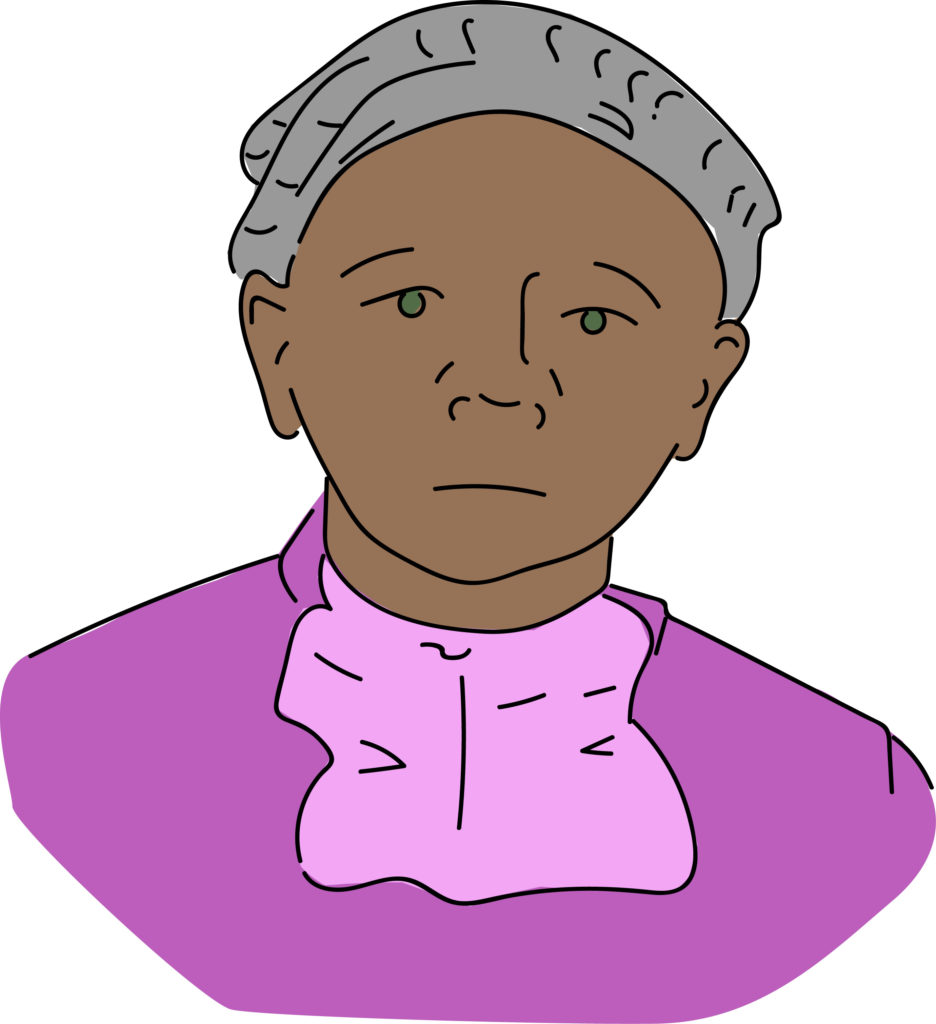
- Araminta “Minty” Ross
- Born into slavery
- 1844 – Married John Tubman
- changed her name from Araminta to Harriet soon after her marriage
- 1849 – escaped and made 13 missions to rescue 70+ slaves
- Tubman carried a small revolver, and was not afraid to use it
- 1858 – met abolitionist John Brown and became “General Tubman” when she helped him plan his raid (that he was killed for)
- 1859 – Purchased property in Auburn, New York
- 1860 – her last rescue mission
- Civil War worked for the Union Army, first as a cook and nurse, and then as an armed scout and spy
- 1863 – The first woman to lead an armed expedition in the war
- June 1 & 2, 1863 – Tubman guided the raid at Combahee Ferry wich liberated 700+ slaves
- 1865 She returned home to NY
- 1869 – Her biography was published – Scenes in the Life of Harriet Tubman
- 1886 – Volume 2 was published – Harriet, the Moses of her People
- 1889 – Congress passed and President William McKinley finally approved a $20 per month pension for some of her efforts during the Civil War
- 1896 – keynote speaker at first meeting of National Federation of Afro-American Women
- 1908 – Harriet Tubman Home for the Aged opened on her NY property
- 1913 – She was buried with semi-military honors at Fort Hill Cemetery in Auburn, NY
- 1937 – Her grave marker was erected by the Empire State Federation of Women’s Clubs
- 1999 – Her grave was added to National Register of Historic Places
“There was one of two things I had a right to”, liberty or death; if I could not have one, I would have the other”
Tubman
About Harriet Tubman
Harriet Tubman, born Araminta Ross into slavery in Dorchester County, Maryland, escaped to Philadelphia in 1849 and then returned to the Eastern Shore about 13 times, guiding roughly 70 enslaved people to freedom through the Underground Railroad. She later said she never lost a passenger. Tubman carried a revolver on these missions for protection against slave catchers and their dogs, and to keep a wavering group moving, which is one reason she holds a place in the history of armed self-defense and the right to bear arms in America.
When the Civil War began she volunteered for the Union Army, working first as a cook and nurse at Port Royal, South Carolina, and then leading a band of scouts under orders of the War Department. Her intelligence work made possible the June 1863 raid at Combahee Ferry, which freed more than 700 people and is widely credited as the first armed military operation in the United States led by a woman. After the war she lived in Auburn, New York, supported women’s suffrage, and founded a home for the aged. In 2024 the Maryland Army National Guard posthumously commissioned her a brigadier general.
Key Facts
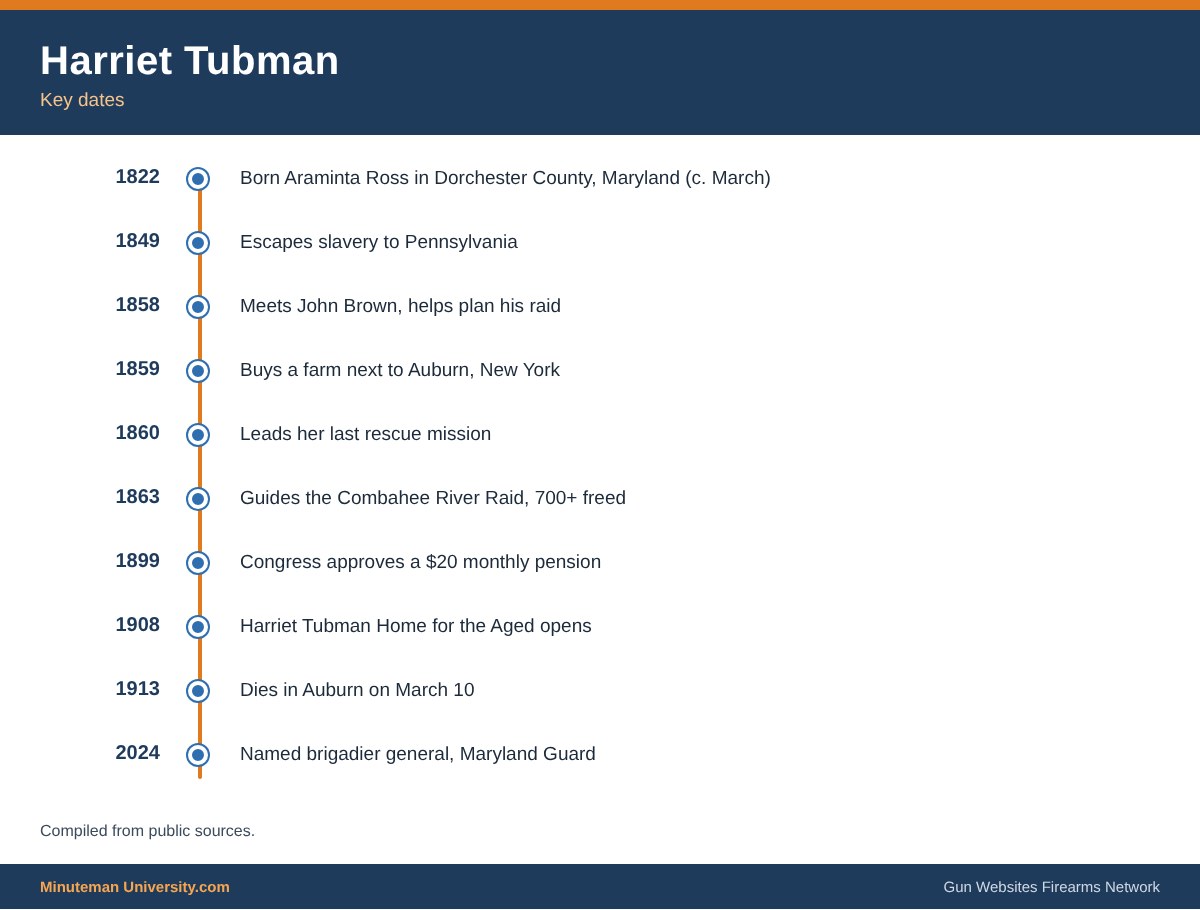
- 1849: Escapes slavery in Maryland and reaches Pennsylvania.
- April 1858: Meets abolitionist John Brown and helps recruit for his planned raid.
- Early 1859: Buys a seven-acre farm in Fleming, next to Auburn, New York, from Frances Seward.
- November 1860: Conducts her last rescue mission into Maryland.
- June 1863: Guides the Combahee River Raid in South Carolina, freeing more than 700 people.
- February 1899: Congress approves a $20 monthly pension, recognizing her service as a nurse.
- November 11, 2024: Posthumously commissioned a brigadier general in the Maryland Army National Guard.
Sources
Profiles on Minuteman University.com are editorial content compiled from public sources. Inclusion does not imply endorsement of, sponsorship by, or affiliation with this site or the Gun Websites Firearms Network. Corrections and removal requests are welcome through Contact Us.