Firearm Videos: Filming Safely, Legally and Within Platform Rules
Firearm video is one of the most effective ways to teach, review gear, document history and show the public what responsible gun ownership looks like. Getting started takes nothing more than a phone and access to a range. Doing it well means planning for three things at once: safety on the line, the law where the filming happens, and the rules of whatever platform will carry the video.
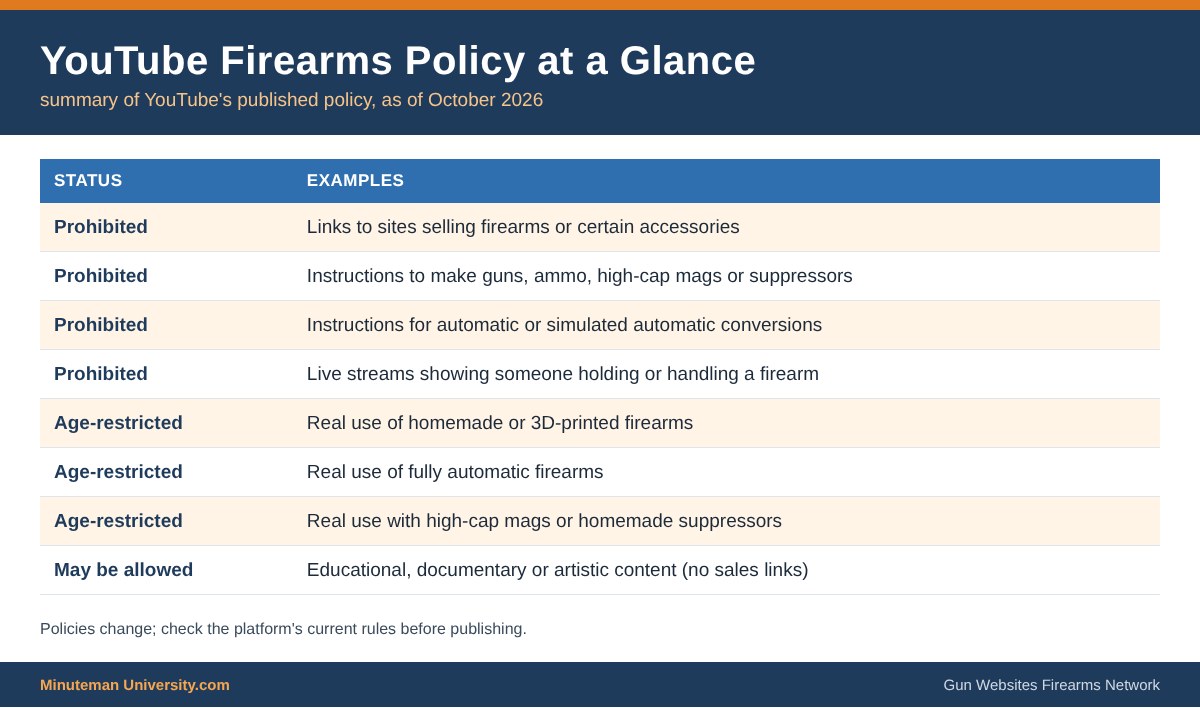
Platform rules are the part most likely to catch creators off guard. YouTube’s firearms policy prohibits linking to sites that sell firearms or certain accessories, instructions for manufacturing firearms, ammunition, high-capacity magazines or homemade suppressors, instructions for automatic-fire conversions, and live streams that show someone holding, handling or transporting a firearm. It age-restricts real use of homemade or 3D-printed guns, fully automatic firearms, and firearms with high-capacity magazines or homemade suppressors. Meta’s policies prohibit private-party firearm sales on Facebook and Instagram. Reviews, safety instruction, history and range footage are generally allowed, but each platform enforces its own terms, so keep original files and publish on more than one outlet, including the creator’s own website.
Safety on Set
- The four basic rules apply on camera exactly as off camera; no shot is worth breaking them.
- The camera operator stays behind the firing line; never film from downrange or in front of the muzzle.
- Use remote triggers, tripods or helmet and rail mounts for close angles instead of a person.
- Eye and ear protection for everyone present, including crew who are only filming.
- Brief the plan before recording, and have a range officer or safety person not running a camera.
Legal and Practical Points
- Film only firearms, accessories and activities that are legal where the video is made; NFA items must be lawfully possessed.
- Follow range rules on filming other shooters and get permission from anyone identifiable.
- Shooting on public land must follow the managing agency’s rules and any local restrictions.
- Audio recording laws vary by state; some require consent from everyone recorded in private conversations.
- Check serial numbers, license plates, addresses and EXIF location data before publishing.
- Use licensed or original music to avoid copyright claims.
Gear Basics
- Cameras and phones: any modern phone works; action cameras handle recoil and close angles.
- Audio: gunshots overload built-in microphones; an external microphone with a limiter helps.
- Editors and computers: free editors are enough to start; faster computers matter at 4K.
- Hosting and monitoring: keep master files backed up and watch each platform for policy notices.
Related: Photography, Audio Hosting, Mapping Apps (EXIF data). Network hub: Gun Websites.com.
Sources
- YouTube Help: Firearms policy
- Meta: Restricted Goods and Services policy
- NSSF: Rules for Safe Firearm Handling
 Get started NOW.
With whatever video equipment you already have, take video of whatever firearms you have access to. Most of the job is getting into a habit of doing it
- Cameras
- Editors
- Computers
- Phones
- Hosting
- Monitoring