Last reviewed October 31, 2026
Federal Gun Laws: Where They Stand in 2026
For ninety years, the National Firearms Act of 1934 treated suppressors and short-barreled long guns like contraband, taxing them at $200 and putting every owner in a federal registry. That changed in 2025 and 2026. The One Big Beautiful Bill Act, signed July 4, 2025, cut the NFA making and transfer tax to $0 for suppressors, short-barreled rifles (SBRs), short-barreled shotguns (SBSs) and “any other weapons” (AOWs), effective January 1, 2026.
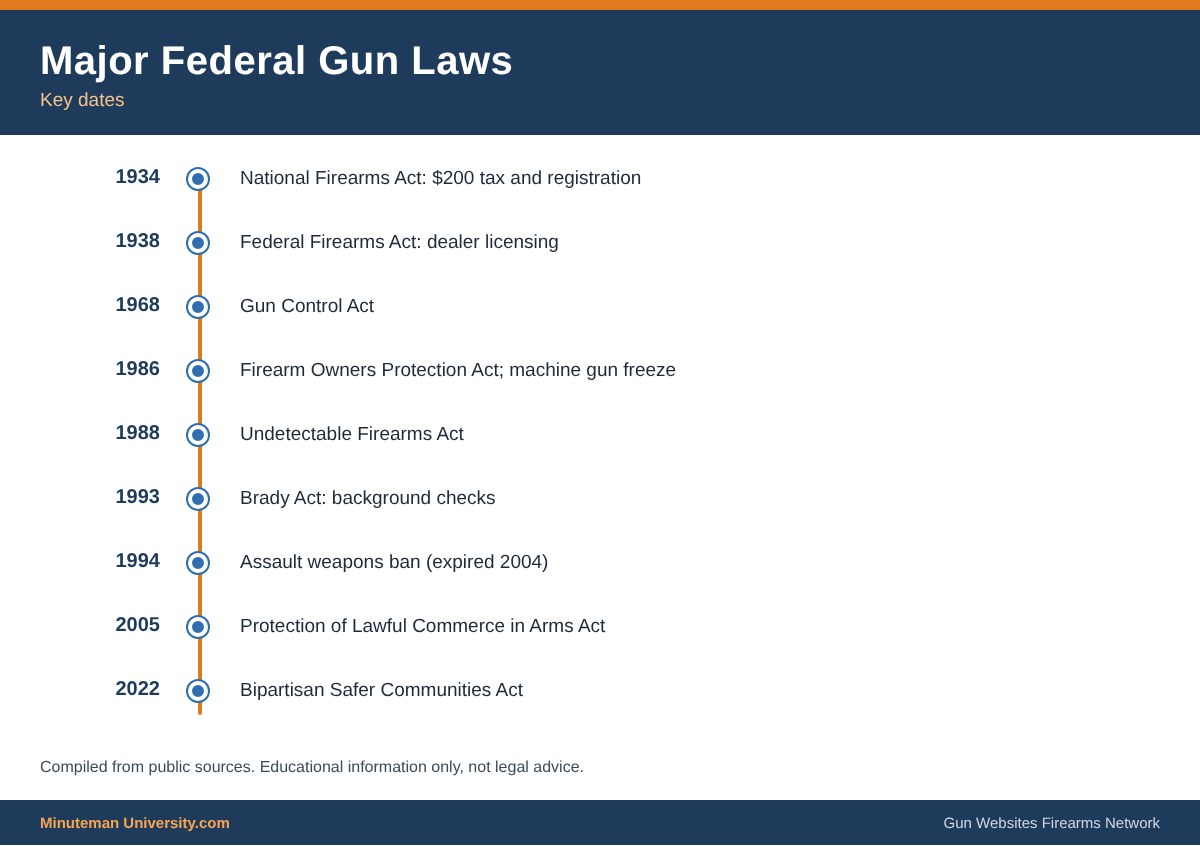
Gun-rights plaintiffs then argued that a $0 tax cannot support a registration scheme built on Congress’s taxing power. On August 5, 2026, Judge James Wesley Hendrix of the Northern District of Texas agreed in Silencer Shop Foundation v. ATF (consolidated with Jensen v. ATF) and entered a permanent injunction for the plaintiffs and their members. The Justice Department did not appeal, and on October 9, 2026, ATF announced it would stop enforcing NFA approval and registration requirements nationwide for those four categories. This is enforcement policy, not repeal: the NFA remains on the books, and machine guns and destructive devices are unaffected.
The rest of the federal framework still applies. The Gun Control Act of 1968 still requires Form 4473 and a NICS check for dealer sales, and the 2022 Bipartisan Safer Communities Act still adds enhanced checks for buyers under 21. In the Fifth Circuit (Texas, Louisiana, Mississippi), Reese v. ATF (January 30, 2025) struck down the federal ban on dealer handgun sales to 18-to-20-year-olds, and DOJ chose not to seek Supreme Court review. National concealed carry reciprocity (H.R. 38) cleared the House Judiciary Committee 18-9 on March 25, 2025, but has not received a floor vote as of October 2026.
Key Facts
- July 4, 2025: One Big Beautiful Bill Act signed; $0 NFA tax for suppressors, SBRs, SBSs and AOWs effective January 1, 2026.
- August 5, 2026: Silencer Shop Foundation v. ATF, No. 6:25-cv-056 (N.D. Tex.), permanent injunction against NFA registration provisions for covered plaintiffs.
- October 9, 2026: ATF open letter and FAQs announcing nationwide non-enforcement of Form 1/Form 4 approval, registration, and related NFA provisions for suppressors, SBRs, SBSs and AOWs.
- Still in force: the $200 tax and full NFA registration for machine guns and destructive devices; the 1986 ban on new civilian machine guns (18 U.S.C. 922(o)); Special Occupational Tax for NFA businesses; Form 20 for taking an SBR or SBS across state lines.
- June 25, 2022: Bipartisan Safer Communities Act signed, adding juvenile-record checks for buyers under 21 and expanding the “engaged in the business” definition.
- January 30, 2025: Reese v. ATF (5th Cir.) holds the 18-to-20 handgun sales ban unconstitutional; DOJ declined to seek certiorari in July 2025. On June 30, 2026, the Supreme Court denied five other age-limit petitions, leaving a circuit split.
- June 18, 2026: United States v. Hemani limits the drug-user ban, 922(g)(3), as applied to a marijuana user.
What Gun Owners Should Know
- State law still controls. Nine states plus D.C. ban suppressors, and several states require proof of federal registration for NFA items. Check state law before making or buying an unregistered item.
- ATF says items removed from the registry generally cannot be re-registered later without an amnesty. Keep copies of every approved form you already hold.
- Policy can be reversed by a future administration, a new tax, or a court. Keep purchase records and follow updates on NFA Buyers Guide.com and Suppressor Buyers Guide.com.
- Form 4473 and NICS still apply to every dealer sale, including suppressors. Answer every question truthfully, including the drug-use question.
- Court rulings that shape federal law are summarized on the Court Cases page. Questions can go to Ask Gun Questions.com.
Across the Gun Websites Network
- National Gun Law Quiz Tactical Quiz.com
- NFA Laws Today NFA Buyers Guide.com
Sources
- Wiley: NFA Court Ruling Reshapes Compliance (Silencer Shop Foundation v. ATF)
- USCCA: ATF Drops NFA Registration for Suppressors, SBRs and SBSs
- American Rifleman: ATF Ends Enforcement of NFA Registration Requirements
- NRA-ILA: DOJ Declines Supreme Court Review in Reese v. ATF
- Congress.gov: H.R. 38, Constitutional Concealed Carry Reciprocity Act of 2025
Background and Resources
Federal firearm laws in the United States are complex. They can be described as a set of regulations that govern the manufacture, sale, possession, and use of firearms across the country. They regulate the possession and transfer of guns and suppressors, among other things. US Federal Gun laws include the prohibitions, background checks and licensing dealers.
The federal firearm laws have become the subject of intense debate and controversy in recent years, with anti-rights advocates of gun control calling for stricter regulations, while opponents argue that such laws would have little effect and waste resources and attention from effective strategies to end violence.
- The 2nd Amendment
 1791 “A well regulated militia, being necessary to the security of ...Read more...
- Militia Acts of 1792
 The first Act, passed May 2, 1792 authority of the president ...Read more...
- Militia Act of 1862
 Militia Act of 1862: Opening Federal Military Service to Black ...Read more...
- Freedmen’s Bureau Act 1865
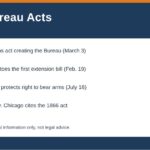 The arms-bearing language appears in the 1866 Freedmen’s Bureau Act, ...Read more...
- Militia Act of 1903 – the Dick Act
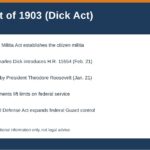 Jan 21, 1903 created an early National Guard and codified the circumstances ...Read more...
- National Defense Act of 1916
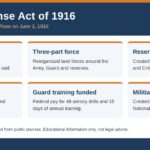 enacted June 3, 1916 updated the Militia Act of 1903 expansion of the Army and the National ...Read more...
- Firearms and Ammunition Excise Tax (FAET)
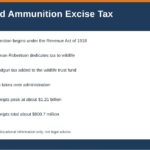 February 25, 1919 Section 4181 of the Internal Revenue Code imposes an ...Read more...
- Mailing of Firearms Act of 1927
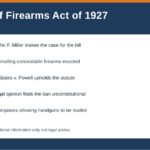 1927 Mailing of Firearms Act “National Firearms Control Act” 18 U.S.C.A. § 1715 prohibiting ...Read more...
- FBI – Uniform Crime Report
 since 1930 Each month, law enforcement agencies report the number of ...Read more...
- 1934 National Firearms Act
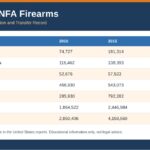 What is the 1934 National Firearms Act ? June 26, 1934 strict ...Read more...
- Federal Firearms Act (FFA)
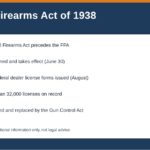 June 30, 1938 required gun manufacturers, importers, and dealers to obtain ...Read more...
- 922r Restrictions on Firearms Manufacturing
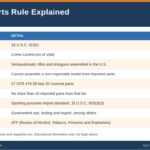 The 922r restrictions on firearms manufacturing refer to a set ...Read more...
- Gun Control Act of 1968
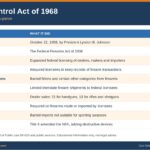 The Gun Control Act of 1968 is a federal law ...Read more...
- Omnibus Crime Control and Safe Streets Act
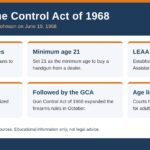 Omnibus Crime Control and Safe Streets Act of 1968 enacted June 19, 1968 Pub.L. ...Read more...
- International Traffic in Arms Regulations (ITAR)
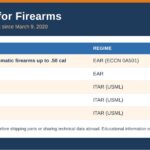 1976 United States regulatory regime to restrict and control the export ...Read more...
- Arms Export Control Act
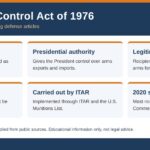 Arms Export Control Act of 1976 Title II of Pub.L. 94–329, 90 Stat. 729 codified at 22 ...Read more...
- Armed Career Criminal Act
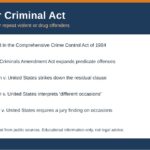 passage in 1984 provides sentence enhancements for felons who commit crimes ...Read more...
- Firearm Owners Protection Act
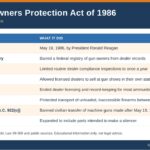 1986 The Firearm Owners Protection Act (FOPA) is a federal law ...Read more...
- Semi Automatic Rifle Import Ban (1989)
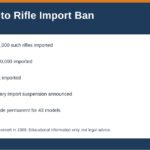 Wed March 15, 1989 – spring suspension July 7, 1989 – Signed ...Read more...
- Gun-Free School Zones Act
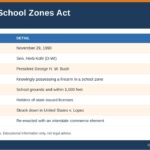 Gun-Free School Zones Act (GFSZA) November 29, 1990 introduced by Senator Herb Kohl of Wisconsin signed into ...Read more...
- Federal Assault Weapons Ban AWB
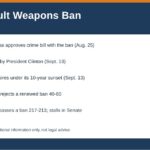 given final passage by the US Congress on August 25, ...Read more...
- Brady Bill (Signed 1993, Effective 1994)
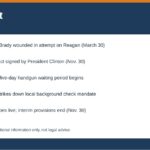 Brady Bill (signed November 30, 1993; only the temporary waiting-period ...Read more...
- Dickey Amendment
 1996 the CDC was funding bias research, the CDC was caught, ...Read more...
- Lautenberg Amendment
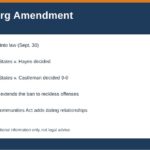 The Domestic Violence Offender Gun Ban, September 30, 1996 1996 Enacted by the ...Read more...
- National Instant Criminal Background Check System
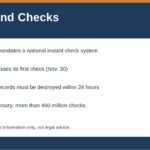 launched by the FBI on November 30, 1998 United States system ...Read more...
- Tiahrt Amendment
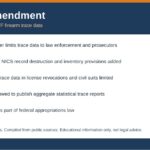 February 20, 2003 proposed by Todd Tiahrt (R-Kan.) prohibited the ATF from ...Read more...
- Law Enforcement Officers Protection Act
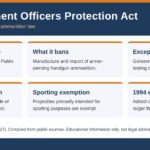 August 28, 1986 prohibits the manufacturing, importing and selling of ammunition ...Read more...
- Understanding the Second Amendment: Its Origins and Importance
 Where the Second Amendment came from, what its words mean, ...Read more...
Other “2A Adjacent” Federal Laws
- 1803 Marbury v. Madison
- 1887 Interstate Commerce Act