Past and Present Gun Control Legislation: Where Federal Law Stands in 2026
Federal gun law in the United States was built in layers over roughly 90 years. Each major act responded to the concerns of its time, from Prohibition-era gangland violence to the political assassinations of the 1960s and later mass shootings, and each drew strong arguments on both sides. Supporters have generally argued these laws reduce crime and keep guns from dangerous people; critics, including most gun-rights organizations, have argued they burden law-abiding owners, have limited effect on crime and in some cases conflict with the Second Amendment.
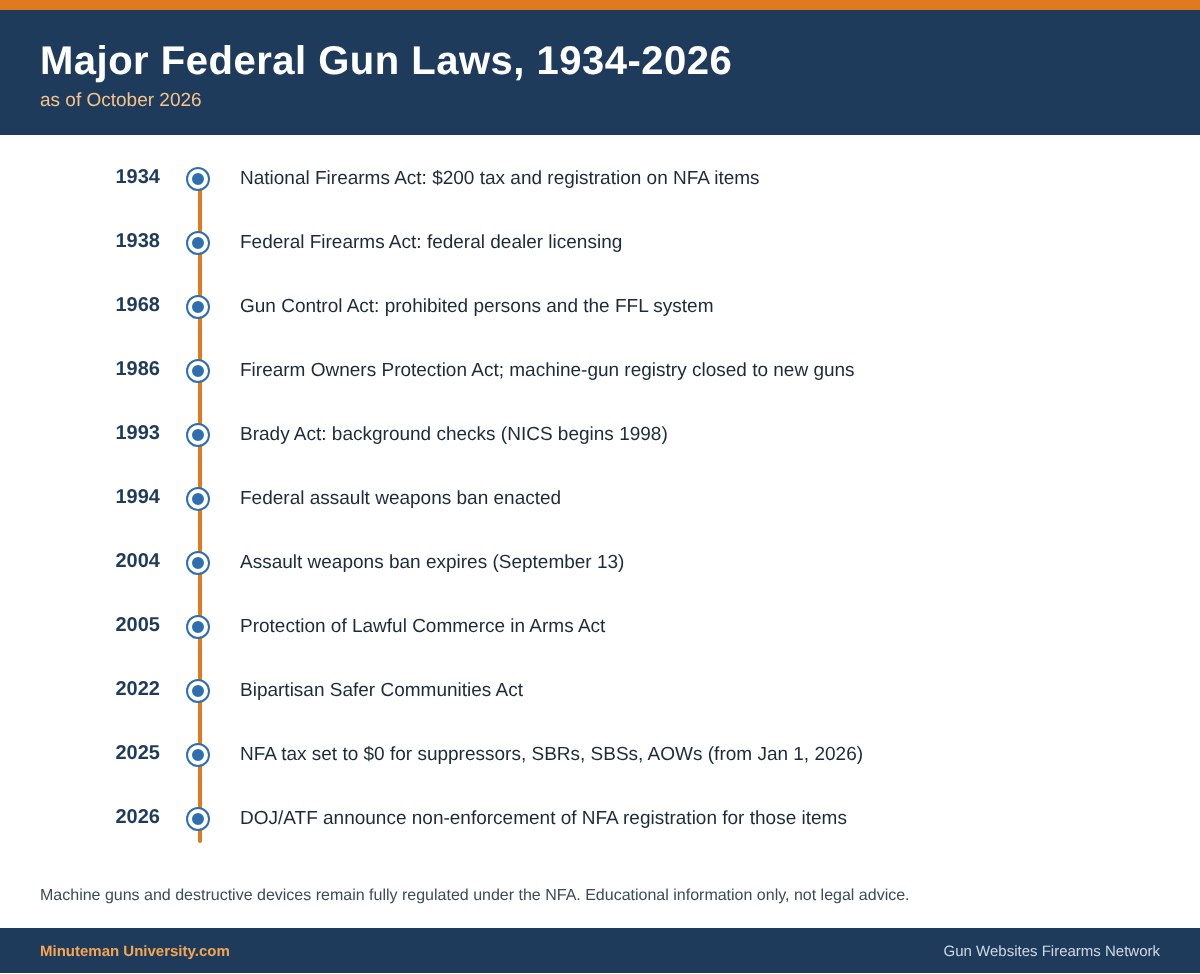
The modern framework starts with the National Firearms Act of 1934, which taxed and registered machine guns, short-barreled rifles and shotguns, and silencers, and the Federal Firearms Act of 1938, which created federal dealer licensing. The Gun Control Act of 1968 replaced the 1938 law and remains the backbone of federal regulation, defining prohibited persons and licensed dealers. The Firearm Owners Protection Act of 1986 added protections for owners, such as safe passage through restrictive jurisdictions, while also closing the machine-gun registry to new civilian guns. The Brady Act of 1993 required background checks, and the 1994 assault weapons ban lasted ten years until it expired in 2004. The Protection of Lawful Commerce in Arms Act of 2005 limited lawsuits against the industry over criminal misuse, and the Bipartisan Safer Communities Act of 2022 added enhanced checks for buyers under 21 and funding for state crisis-intervention programs.
The most recent changes run the other direction. The One Big Beautiful Bill Act, signed July 4, 2025, cut the NFA tax to $0 for suppressors, short-barreled rifles and shotguns, and “any other weapons” effective January 1, 2026. After a federal court in Texas ruled the remaining permitting process unconstitutional for those items, the Justice Department announced on October 9, 2026, that it would not enforce their federal registration. Machine guns and destructive devices remain fully regulated, background checks still apply, and roughly 15 states have their own laws tied to the federal process. Court rulings, especially Heller (2008) and Bruen (2022), now shape how all of these laws are tested.
This page is an overview. Detailed summaries of each statute are on the Federal Laws page, and the broader legal picture is on Firearm Law in the USA.
Key Facts
- June 26, 1934: National Firearms Act; $200 tax and registration on NFA items.
- June 30, 1938: Federal Firearms Act; federal dealer licensing.
- October 22, 1968: Gun Control Act; prohibited persons and the FFL system.
- May 19, 1986: Firearm Owners Protection Act; owner protections and the machine-gun registry cutoff.
- November 30, 1993: Brady Act; background checks (NICS launched November 30, 1998).
- September 13, 1994: Federal assault weapons ban; expired September 13, 2004.
- October 26, 2005: Protection of Lawful Commerce in Arms Act (PLCAA).
- June 25, 2022: Bipartisan Safer Communities Act.
- July 4, 2025: NFA tax set to $0 for suppressors, SBRs, SBSs and AOWs, effective January 1, 2026.
- October 9, 2026: Justice Department announces non-enforcement of NFA registration for those items.
What Gun Owners Should Know
- Federal law is only one layer; state and local laws can be stricter. See State Firearm Laws.
- The 2025-2026 NFA changes do not cover machine guns or destructive devices, and some states still require federal NFA approval; check your state before acting. NFA Buyers Guide.com and Suppressor Buyers Guide.com track the details.
- A background check and Form 4473 still apply to purchases from licensed dealers; see Background Checks.
- Laws can change quickly through courts, Congress and agency policy; follow Court Cases for current litigation.
- Questions about how a law applies can be submitted at Ask Gun Questions.com; for legal advice, consult a qualified attorney.