Last reviewed October 31, 2026
2A Doctors: Where It Stands in 2026
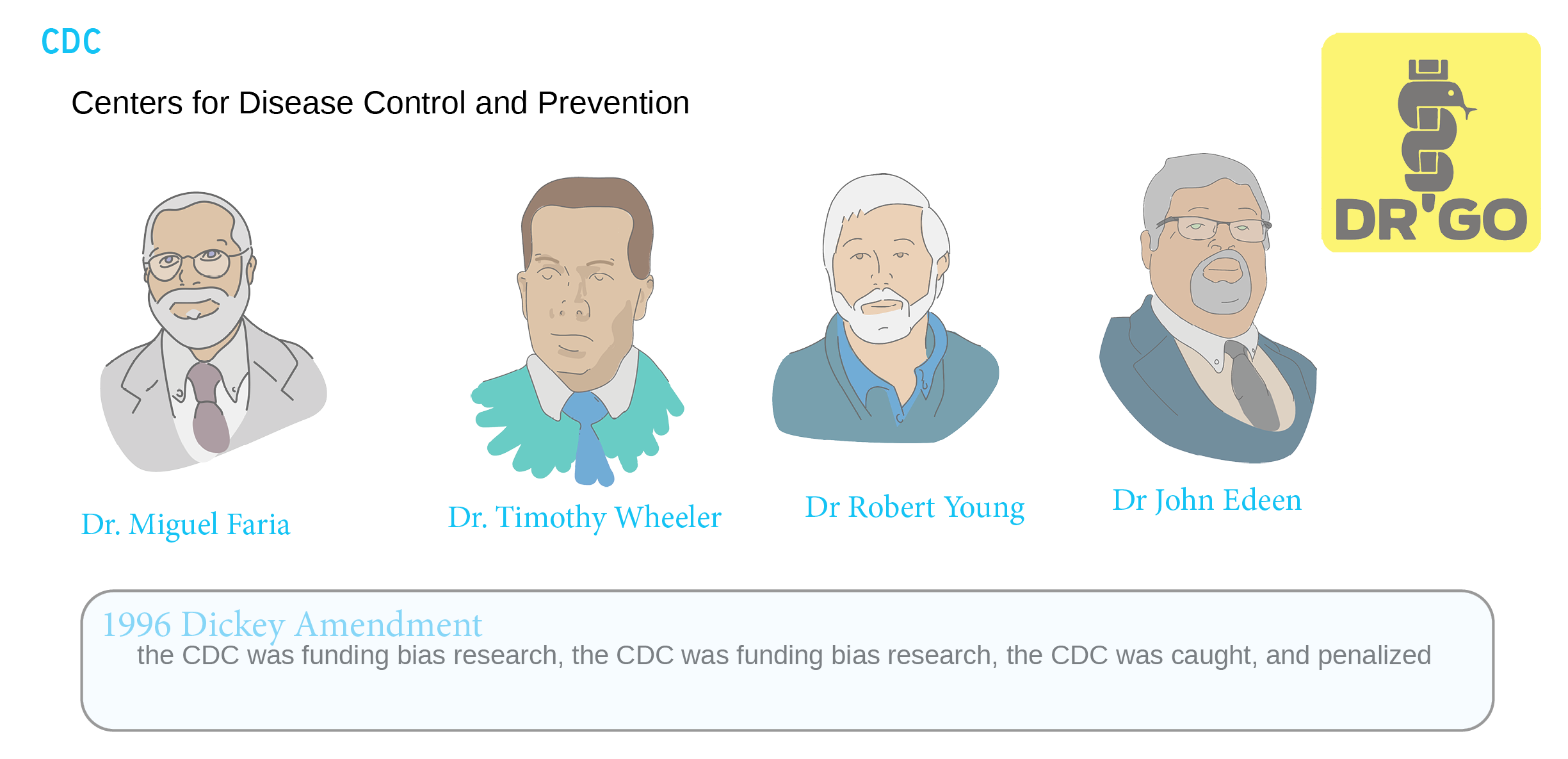
For decades, major medical associations and federal public health agencies have treated lawful gun ownership as a disease to be managed rather than a constitutional right to be respected. Pro-Second-Amendment physicians have pushed back, arguing that real research must be objective, that patients should not be interrogated about lawful property, and that the doctor’s office must not become a gun registry. The doctors profiled below helped lead that fight, starting with their 1996 testimony to Congress.
That testimony led to the Dickey Amendment, which since 1996 has barred CDC funds from being used “to advocate or promote gun control.” In the fiscal 2020 spending bill, Congress began funding firearm injury research at CDC and NIH again while keeping the Dickey language in place. For fiscal 2026, Congress provided $12.5 million each to CDC and NIH, and medical groups are lobbying for more in fiscal 2027.
The federal posture has shifted. On June 25, 2024, then-Surgeon General Vivek Murthy issued an advisory declaring “firearm violence” a public health crisis. In March 2025, HHS removed that advisory from its website after Executive Order 14206 ordered agencies to review actions that burden Second Amendment rights. Gun-rights advocates welcomed the change; public health groups criticized it.
Patient privacy remains a live issue. Florida’s 2011 Firearm Owners’ Privacy Act, which restricted doctors from questioning patients about guns, was largely struck down by the Eleventh Circuit in Wollschlaeger v. Governor of Florida (en banc, February 16, 2017) on free-speech grounds. The law’s provision barring discrimination against patients for owning firearms survived, and patients can still decline to answer questions about firearm ownership.
Key Facts
- March 6, 1996: physicians testified before a House appropriations subcommittee about CDC gun control advocacy; the Dickey Amendment followed in the fiscal 1997 appropriations law.
- December 2019: Congress funded federal firearm research for fiscal 2020, the first dedicated funding in more than two decades, with the Dickey restriction intact.
- Fiscal 2026: $12.5 million to CDC and $12.5 million to NIH for firearm research (Big Cities Health Coalition, May 2026).
- June 25, 2024: Surgeon General advisory on firearm violence issued; removed by HHS in March 2025.
- February 16, 2017: Wollschlaeger v. Governor of Florida struck down the “doctors vs. Glocks” inquiry and record restrictions as First Amendment violations.
What Gun Owners Should Know
- Questions about firearm ownership on medical intake forms are generally voluntary. Patients may decline to answer, and federal privacy rules (HIPAA) govern how that information is shared.
- Mental health treatment by itself does not make someone a prohibited person; see Mental Health and Gun Ownership.
- Look for physicians and organizations that respect gun owners, such as Doctors for Responsible Gun Ownership.
- When reading firearm studies, check who funded them, how “children” is defined and whether suicides are combined with homicides; see Firearm Deaths.
- Profiles of more 2A activists are in the Minuteman University.com activist directory, and related court rulings are on the Court Cases page.
Sources
- Big Cities Health Coalition: 400+ Organizations Urge Congress to Continue Firearm Research Funding (May 2026)
- Axios: HHS Drops Surgeon General’s Advisory on Gun Violence (March 18, 2025)
- ACLU of Florida: Wollschlaeger v. Governor of Florida (case summary)
- Stateline: Federal Spending Bill Contains Money for Gun-Related Research (December 16, 2019)
Background and Resources

- 1996 Ban on funding for gun control advocacy at the federal Centers for Disease Control and Prevention (CDC)
– March 6, 1996
– doctors testified before the House’s Labor, Health, Human Services, and Education Appropriations Subcommittee about the CDC’s misdeeds
Congress should ignore the tricksters and continue holding the CDC to its mission of objective research, not pushing for gun control. – Timothy Wheeler, MD
These are some Doctors and 2A Activists


