Gun Control Advocates: Who They Are and What They Seek
Understanding the organizations that push for stricter gun laws is basic preparation for anyone who follows Second Amendment issues. Knowing their history, their stated goals and how they operate makes it possible to respond to their proposals accurately, without guessing or caricature. This page describes the major national groups in neutral terms, based on their own public statements and the public record.
The modern gun control movement took shape in the 1970s. The National Council to Control Handguns, founded in 1974, became Handgun Control, Inc. in 1980 and later took the name Brady, after former White House press secretary James Brady, who was wounded in the 1981 attempt on President Reagan. The National Coalition to Ban Handguns, also founded in 1974, became the Coalition to Stop Gun Violence. The Violence Policy Center, a research and advocacy group, followed in 1988.
The largest groups today formed after 2012. Everytown for Gun Safety was launched in 2014, joining Mayors Against Illegal Guns (2006) and Moms Demand Action, which began after the Sandy Hook shooting in December 2012; it is closely associated with funding from Michael Bloomberg. Giffords grew out of Americans for Responsible Solutions, founded in 2013 by former Representative Gabrielle Giffords and her husband, now Senator Mark Kelly, and merged in 2016 with the Law Center to Prevent Gun Violence. Sandy Hook Promise (2013) focuses on violence prevention programs in schools, and March For Our Lives was formed by students after the 2018 Parkland shooting.
Common stated goals across these groups include universal background checks, red flag (extreme risk) laws, restrictions on semiautomatic rifles and magazines, safe storage and permit-to-purchase laws, and expanded liability for the firearms industry. Their methods include lobbying, ballot measures, election spending, litigation and funding research. Gun-rights groups respond that these measures burden law-abiding owners and conflict with the Second Amendment as interpreted in Heller and Bruen.
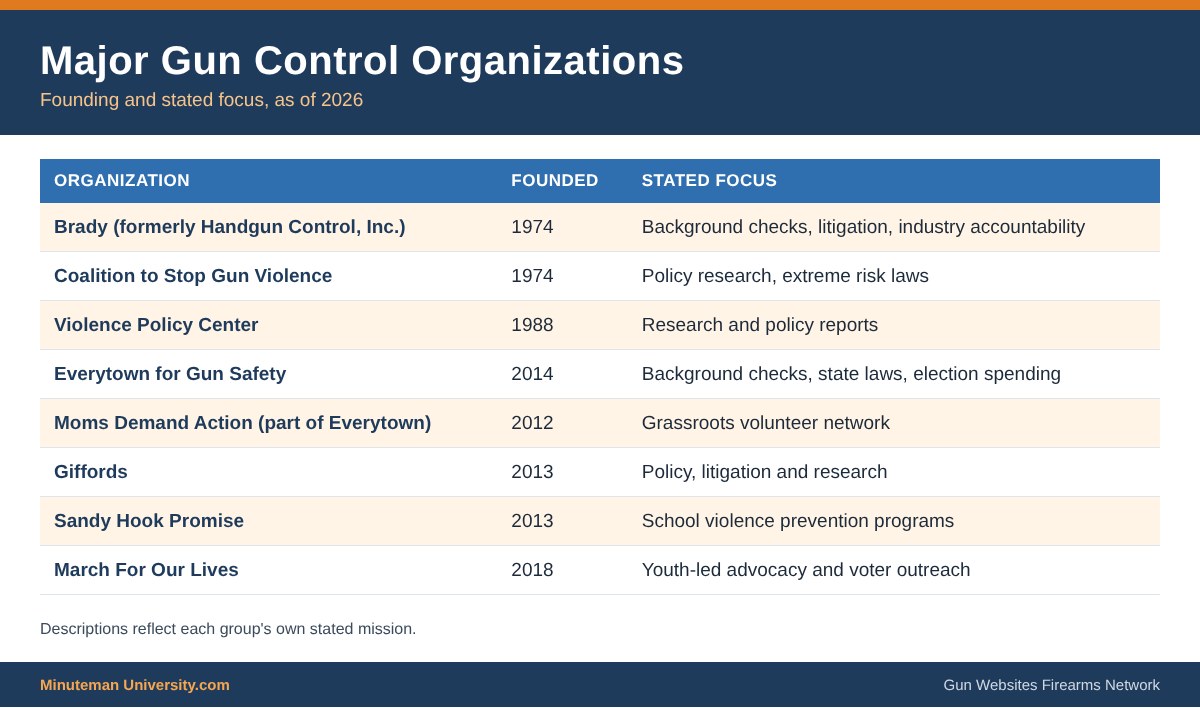
Key Facts
- Brady and the Coalition to Stop Gun Violence both trace their roots to 1974.
- Everytown (2014) and Giffords (2013/2016) are the largest national groups by public profile and spending.
- Several groups run legal arms that defend state gun laws in court and file amicus briefs in Second Amendment cases.
- Lobbying and campaign spending by both sides is reported publicly and tracked by OpenSecrets.
What Gun Owners Should Know
- Read the actual bill or ballot text a group supports; summaries from either side can leave out details.
- Model legislation often appears in several states at once; watch neighboring states for previews.
- Respond to stated positions with facts and the legal test, not personal attacks; it is more persuasive.
Related: Anti Rights Groups, Criminal History, Waves of Infringements, National Gun Owner Rights Groups, and Gun Websites.com.