About the History of U.S. Gun Laws
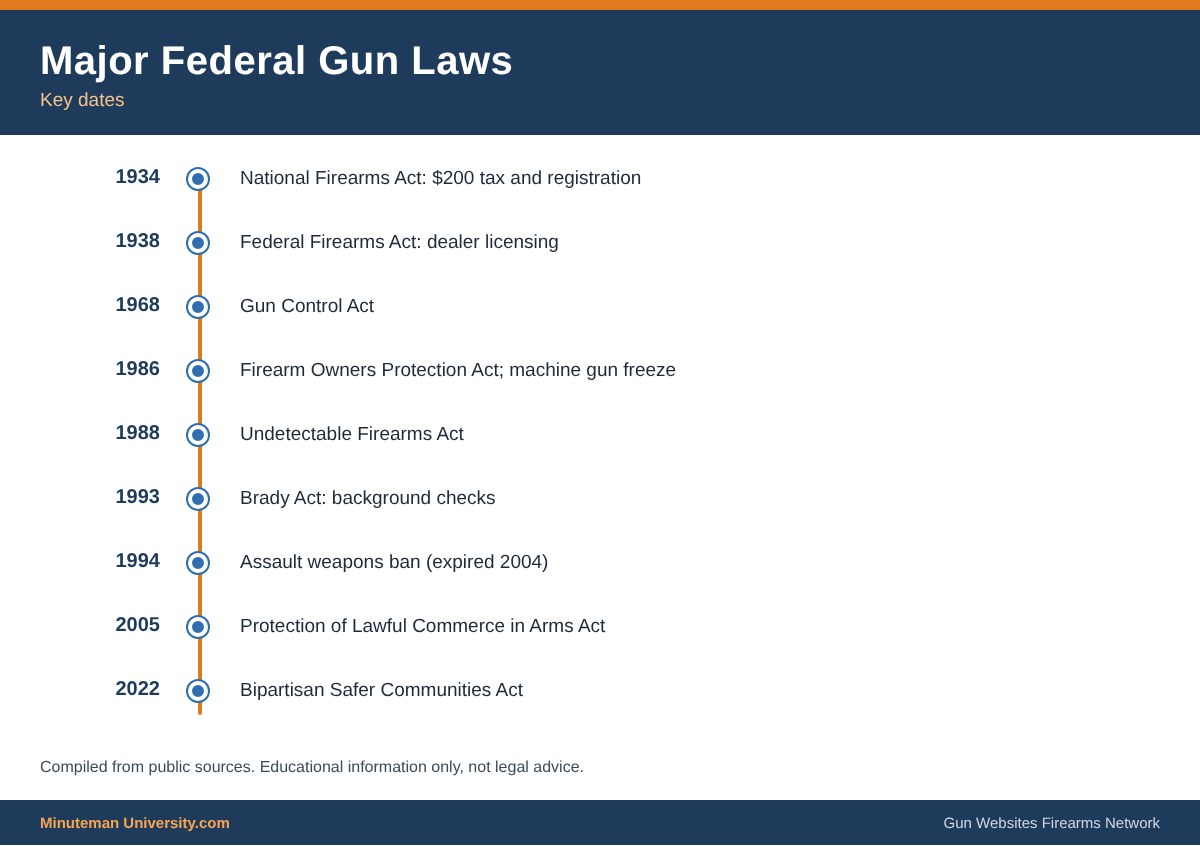
American gun law is built in layers, with each major federal statute responding to the events of its era. The National Firearms Act of 1934, passed after Prohibition-era gang violence, imposed a $200 tax and registration on machine guns, short-barreled rifles and shotguns, and suppressors. The Federal Firearms Act of 1938 created federal licensing for gun dealers, and the Gun Control Act of 1968, passed after the assassinations of the 1960s, routed most interstate gun sales through licensed dealers, set a minimum age of 21 for handgun purchases from those dealers and defined categories of prohibited persons. The Firearm Owners Protection Act of 1986 rolled back several GCA rules but froze the civilian machine gun supply at guns made before May 19, 1986.
The 1990s brought the Brady Act, which created the federal background check system, and the 1994 assault weapons ban, which lapsed in 2004. The Protection of Lawful Commerce in Arms Act of 2005 shields manufacturers and dealers from liability when their lawful products are misused by criminals, and the Bipartisan Safer Communities Act of 2022 expanded checks for buyers under 21. State law varies widely on top of this federal base: 45 state constitutions protect a right to bear arms, and since 2022 states may no longer require applicants to show special need for a carry license.
Key Facts
- 1934: National Firearms Act imposes a $200 tax and registration on NFA items
- 1968: Gun Control Act channels interstate sales through licensed dealers
- May 19, 1986: FOPA closes the machine gun registry to new civilian guns
- 1993: Brady Act requires background checks on most dealer sales
- 2005: Protection of Lawful Commerce in Arms Act enacted
- 2022: Bipartisan Safer Communities Act expands checks for buyers under 21
Learn More
Sources
Profiles on Minuteman University.com are editorial content compiled from public sources. Inclusion does not imply endorsement of, sponsorship by, or affiliation with this site or the Gun Websites Firearms Network. Corrections and removal requests are welcome through Contact Us.