- February 20, 2003
- proposed by Todd Tiahrt (R-Kan.)
- prohibited the ATF from publicly releasing data showing where criminals purchased their firearms
- only law enforcement officers or prosecutors
About the Tiahrt Amendment
The Tiahrt Amendment is a series of riders, named for Representative Todd Tiahrt of Kansas, that Congress has attached to Justice Department appropriations bills since 2003. The first version was signed into law on February 20, 2003, as part of the fiscal year 2003 appropriations act. It limits how the ATF’s National Tracing Center may share firearm trace data, the records that show the chain of sale of a gun recovered by police, so that the data goes only to law enforcement agencies or prosecutors in connection with a criminal investigation. It also barred the use of trace data in civil lawsuits against gun manufacturers and dealers.
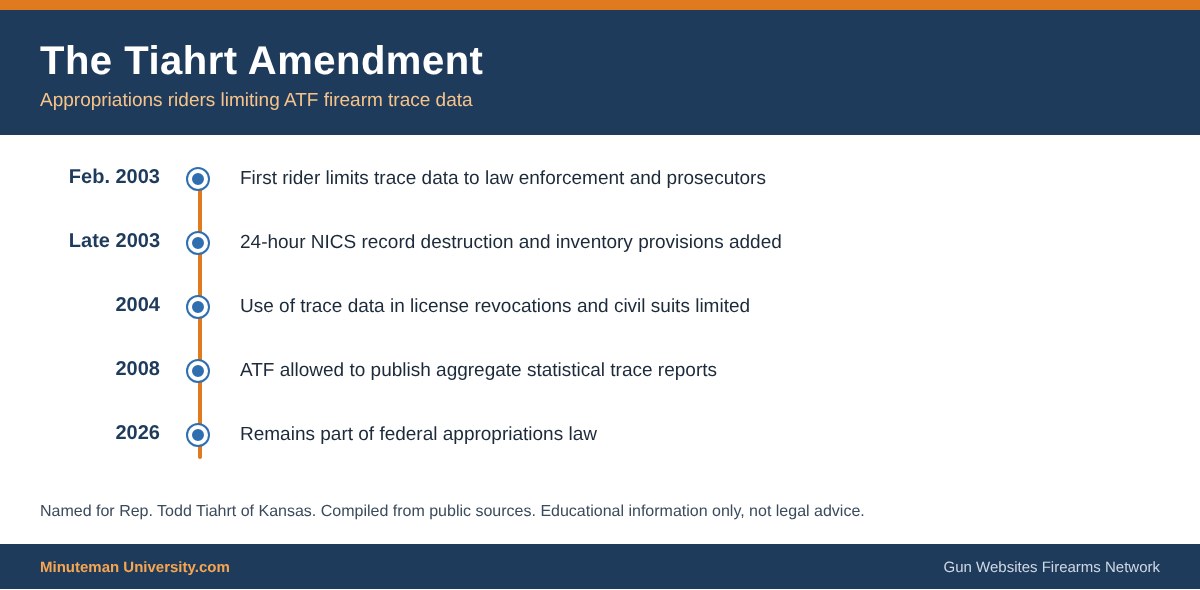
Later versions added related protections. In late 2003 Congress required the FBI to destroy approved NICS background check records within 24 hours and barred ATF from requiring dealers to conduct physical inventories. In 2008 Congress allowed ATF to publish aggregate statistical reports on trace data. Supporters, including the NRA and many law enforcement groups, argue the rider protects gun owners’ privacy and the integrity of ongoing investigations, while critics argue it limits research and civil litigation. It remains part of federal appropriations law as of 2026.
Key Facts
- February 20, 2003 – First Tiahrt rider signed into law in the fiscal 2003 appropriations act
- Late 2003 – 24-hour NICS record destruction and inventory provisions added
- 2004 – Use of trace data in license revocations and civil suits further restricted
- 2008 – ATF permitted to publish aggregate statistical trace reports