Write it down so the effort outlasts any one volunteer.
Systematize 2A: Building Repeatable Systems for Recruitment and Continuation
Many 2A groups, clubs and online projects depend on one or two energetic people. When those people move, burn out or lose interest, the effort often stops. Systematizing means turning what those people do from memory into written, repeatable processes, so that recruiting new shooters and members, training volunteers and handing off leadership happens the same way every time, no matter who is in charge.
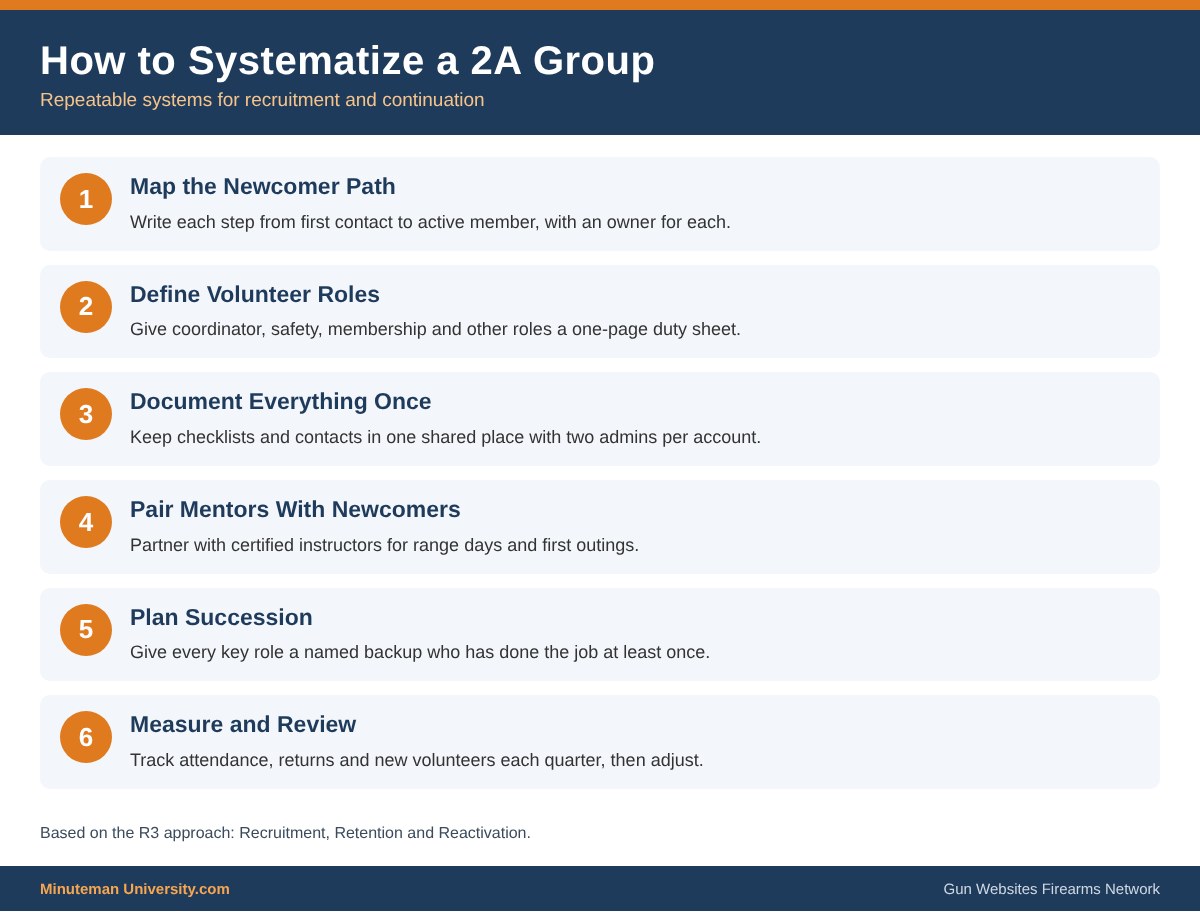
The shooting and hunting community already has a framework for this. State wildlife agencies, conservation groups and the National Shooting Sports Foundation (NSSF) use “R3”, short for Recruitment, Retention and Reactivation, and NSSF published an R3 Handbook in 2018. NSSF programs built on the same idea include First Shots, which helps member ranges introduce newcomers to shooting, and the +ONE Movement, which asks each experienced shooter or hunter to mentor one new person. August is promoted as National Shooting Sports Month. A local 2A group can borrow the same approach: bring someone in, help them stay, and invite back those who drifted away.
A practical system covers a few core pieces: a clear path for a newcomer (first contact, first range day, first meeting, first volunteer task); defined volunteer roles with written duties; a shared, backed-up home for documents, contact lists and passwords; a calendar of recurring events; and a succession plan so every key role has a trained backup. Simple metrics, such as how many new people attended, how many returned and how many took on a role, show whether the system is working. None of this requires a particular political approach; it works the same for a range club, a training group, a nonpartisan civil-rights organization or a content project.
Key Points
- R3 framework: Recruitment, Retention and Reactivation, used across hunting and shooting-sports programs; NSSF R3 Handbook (2018).
- First Shots: NSSF program that supports member ranges in introducing newcomers to shooting.
- +ONE Movement: NSSF mentoring campaign encouraging each participant to bring one new person.
- National Shooting Sports Month: held each August.
- Continuation risk: undocumented roles, single-person account access and no trained successor are frequent points of failure for volunteer groups.
Steps to Systematize a 2A Effort
- Map the newcomer path. Write down each step from first contact to active member, with who is responsible for each.
- Define roles. Typical roles include coordinator, range or event lead, safety officer, communications, membership and treasurer; give each a one-page duty sheet.
- Document everything once. Keep checklists, templates and contacts in one shared location with at least two administrators on every account.
- Pair mentors with newcomers. Partner with certified instructors for range days; see Firearm Instructors and After Action.net.
- Schedule a recurring calendar. Regular events build habit; Gun Calendars.com lists 2A history dates and events.
- Plan succession. Every key role should have a named backup who has done the job at least once.
- Measure and review. Track attendance, returns and new volunteers each quarter, and adjust.
- Fund it sustainably. See Funding your 2A Project, and connect with established Gun Rights Groups. For skill progression, see Levels of 2A Proficiency.
Sources
- NSSF: Industry Growth Initiatives (+ONE, First Shots, National Shooting Sports Month)
- NSSF R3 Handbook (2018)
- NSSF: First Shots program incentives for host ranges