How to Create Your Own Social Media Content: A Practical Guide for Second Amendment Creators
Videos, photos and posts made by ordinary gun owners reach millions of people, and well-made content can show safe, lawful firearm ownership to an audience that may never visit a range. Doing it well means understanding each platform’s rules, filming safely and legally, respecting copyright, disclosing sponsorships and getting the facts right.
Platform rules differ, and all of them change. As of 2026, YouTube’s firearms policy prohibits content intended to sell firearms or certain accessories (including links to sellers), instructions for making firearms, ammunition, high-capacity magazines or homemade suppressors, instructions for converting a firearm to automatic fire, and live streams that show someone holding, handling or transporting a firearm; some real-use footage of automatic or homemade firearms is age-restricted. Meta (Facebook and Instagram) prohibits firearm sales between private individuals, a rule in place since 2016, while licensed dealers may still post about their business. X’s ad policy prohibits promoting guns and weapon accessories, with an exception for gun rentals at shooting ranges; regular posts fall under its general rules. TikTok’s ad policy prohibits ads for guns, gun parts and ammunition, and its Community Guidelines also address how weapons may be shown. Read the current policy pages before posting, because enforcement can change without much notice.
Beyond platform rules, federal law applies to creators who earn money. The Federal Trade Commission’s Endorsement Guides, last revised in June 2023, require a clear disclosure whenever a creator has a material connection to a brand, such as payment, free products or affiliate commissions. Copyright law also applies: most commercial music cannot be used without a license, and platforms detect it automatically.
For examples of a firearms network built around education and reviews, see Gun Websites.com.
Steps to Create Content
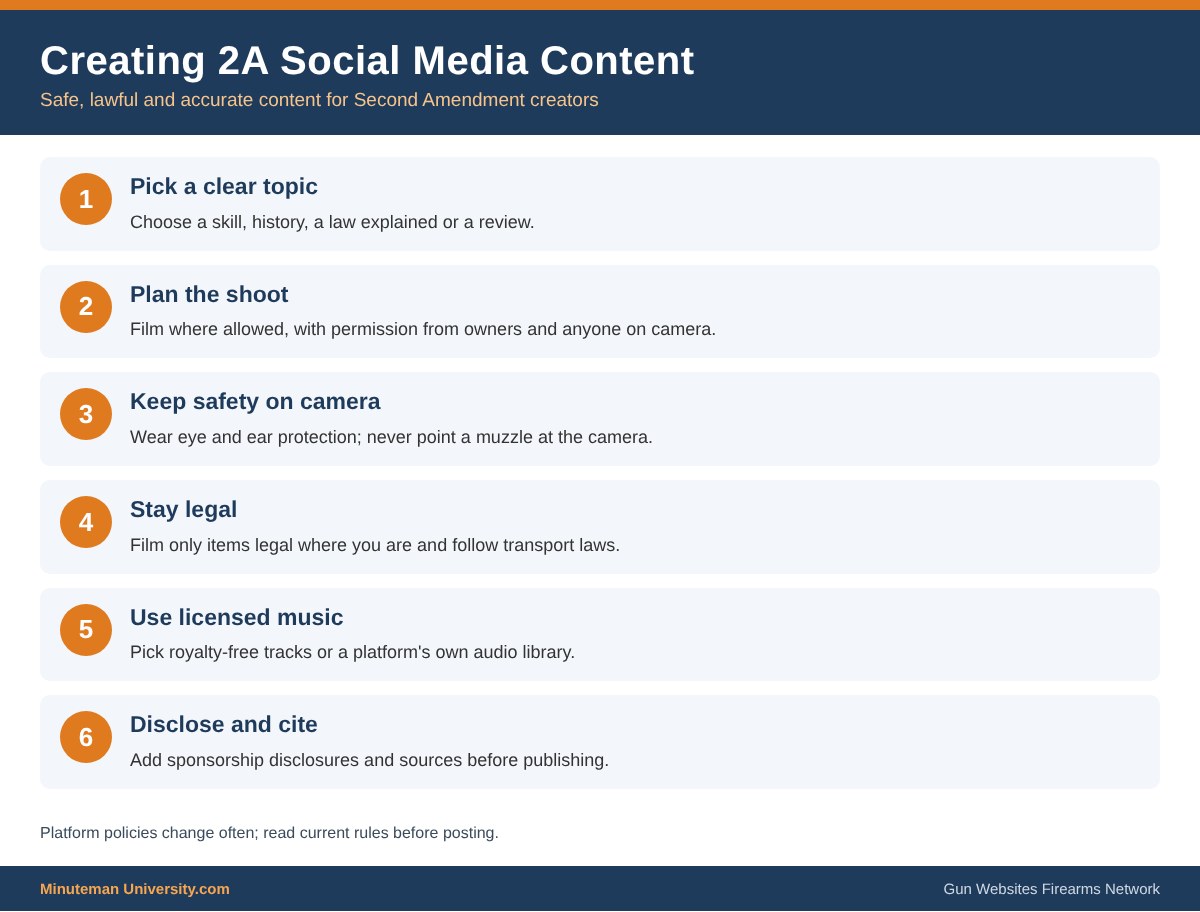
- Pick a clear topic: a skill, a piece of history, a law explained, or a product review.
- Plan the shoot at a range or private property where filming is allowed, with permission from the owner and anyone who appears on camera.
- Follow the basic safety rules on camera at all times, wear eye and ear protection, and keep the muzzle in a safe direction, never toward the camera or its operator.
- Film only firearms and accessories that are legal where you are, and follow transport laws when traveling to a location.
- Use music you are licensed to use, such as royalty-free tracks or a platform’s own audio library.
- Add disclosures and sources in the video itself and in the description before publishing.
Tips for Accurate, Lasting Content
- Cite laws, court cases and statistics to primary sources, and include the date, since gun law changes often.
- Disclose sponsorships, free products and affiliate links clearly, in plain words such as “sponsored” or “paid link,” where viewers will see them.
- Avoid content that looks like a sales listing on platforms that ban sales.
- Keep your own copies of all videos in case an account is restricted.
- Describe opposing views fairly; accuracy builds trust with new audiences.
Sources
- YouTube Help: Firearms policy
- X Ads Policies: Weapons and weapon accessories
- TikTok Ads Policy: Dangerous products or services
- FTC: Disclosures 101 for Social Media Influencers
- U.S. Copyright Office: Fair Use Index