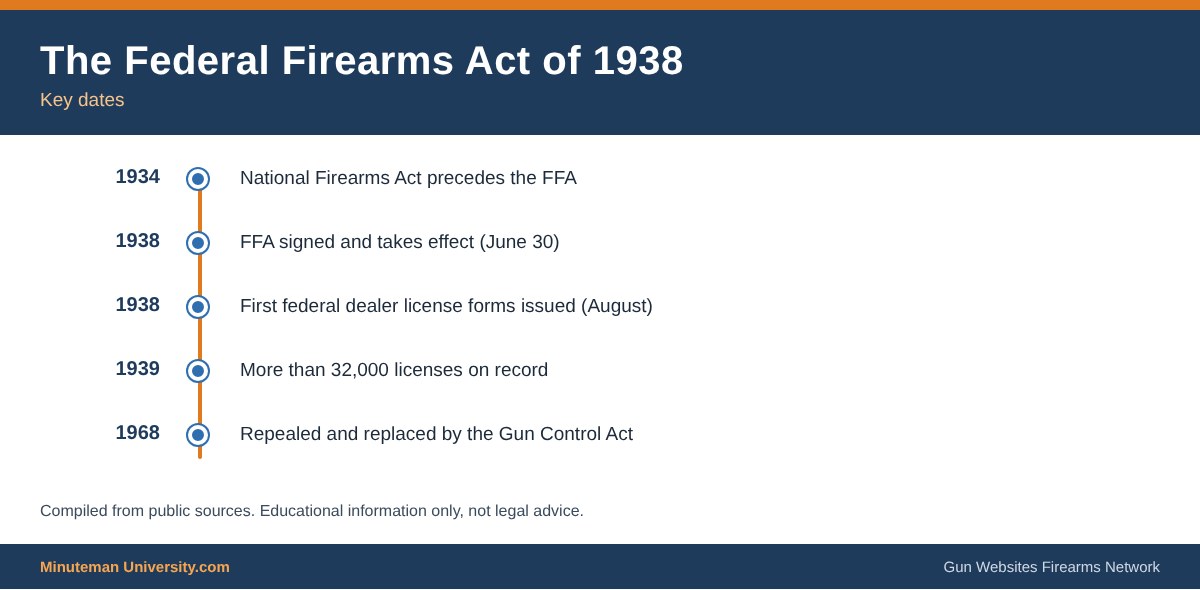
- June 30, 1938
- required gun manufacturers, importers, and dealers to obtain a federal firearms license
- convicted felons, who could not purchase guns
- mandated that gun sellers keep customer records
- FFA was repealed in 1968 by the Gun Control Act (GCA)
About the Federal Firearms Act
The Federal Firearms Act of 1938 was the first federal law to require licensing of firearms businesses. Signed by President Franklin D. Roosevelt and effective June 30, 1938, it required manufacturers, importers and dealers who shipped or received firearms and pistol ammunition in interstate or foreign commerce to hold a federal license. The fees were modest: $25 a year for manufacturers and $1 a year for dealers, and licenses were issued to any applicant who met the minimum requirements. Licensees had to keep records of their transactions, and it became illegal to ship firearms to people convicted of certain crimes of violence.
The FFA followed the National Firearms Act of 1934 and was one of the New Deal era’s two major federal gun laws. Its licensing system was the ancestor of today’s Federal Firearms License, or FFL. The act remained in force for three decades until the Gun Control Act of 1968 repealed it and reenacted many of its provisions in expanded form, adding broader categories of prohibited persons and tighter rules on interstate sales.
Key Facts
- 1934 – National Firearms Act precedes the FFA
- June 30, 1938 – Federal Firearms Act signed by President Roosevelt and takes effect
- August 1938 – First federal license forms issued to dealers and manufacturers
- 1939 – More than 32,000 licenses recorded by the Commissioner of Internal Revenue
- 1968 – Repealed and replaced by the Gun Control Act of 1968