Use these five levels to see where you stand and what the next step looks like.
Levels of 2A Proficiency: A Progression Model for Shooters and Advocates
Proficiency in the Second Amendment world has two sides: skill with firearms and skill in defending the right to own them. A competent shooter who cannot explain the law, or a well-read advocate who has never taken a class, is only partly prepared. The five levels below describe a path from first awareness to recognized authority. They give individuals a way to judge where they stand, and give clubs, instructors and organizations a common language for training and for matching volunteers to tasks.
The model follows a long tradition of skill-stage frameworks. One widely cited example is the Dreyfus model of skill acquisition, developed by Stuart and Hubert Dreyfus in 1980, which traces learners from rule-following novices to experts who act on deep, intuitive understanding. The same pattern applies here: early stages depend on rules and checklists, later stages on judgment and experience. Moving up is rarely about time alone; it comes from deliberate practice, honest feedback and teaching others.
The Five Levels
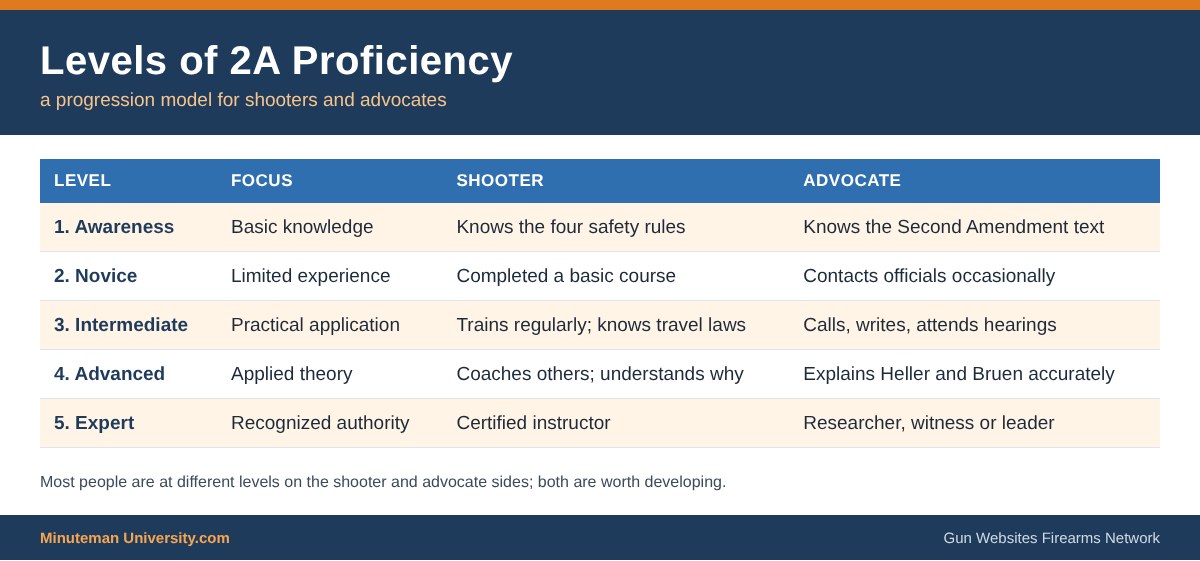
- Awareness (basic knowledge): knows the four safety rules, the text of the Second Amendment and that gun laws vary by state.
- Novice (limited experience): has taken a basic course, shoots under supervision or with friends, follows major news and contacts officials occasionally.
- Intermediate (practical application): trains regularly, carries or competes where legal, knows the laws of home and travel states, writes or calls legislators and attends hearings.
- Advanced (applied theory): understands why techniques and laws work as they do, coaches others, explains court rulings such as Heller and Bruen accurately and helps lead local efforts.
- Expert (recognized authority): certified instructor, published researcher, expert witness or organizational leader whose work others rely on.
How to Move Up a Level
- Take a structured class at the next level instead of repeating comfortable range sessions.
- Read primary sources: the statute, the court opinion, the bill text, not only summaries.
- Keep a training and advocacy log to track progress honestly.
- Teach what has been learned; explaining a skill exposes gaps quickly.
- Find a mentor one or two levels ahead.
Related: Court Cases, Hacking 2A. Training: After Action.net. Test knowledge: Tactical Quiz.com.
Sources
- Dreyfus and Dreyfus: A Five-Stage Model of the Mental Activities Involved in Directed Skill Acquisition (1980)
- NSSF: Rules for Safe Firearm Handling
- Supreme Court: NYSRPA v. Bruen (2022)
- Awareness
– Basic Knowledge - Novice
– Limited Experience - Intermediate
– Practical Application - Advanced
– Applied Theory - Expert
– Recognized Authority