2A Skills · Know Your AudienceThe same fact lands differently with different people.Understand who is listening and what they value.
Each generation grew up with different technology, fears and expectations. Speak to the person in front of you.
Values of each generation create strength
Notes:
- Generations vary by geography
- Older generations were taught feedback is when you’re doing something wrong
- Millennials / Gen Z were taught if your boss is not talking to you, you’re doing something wrong.
Avoid generalizations and stereotypes
Generation Z
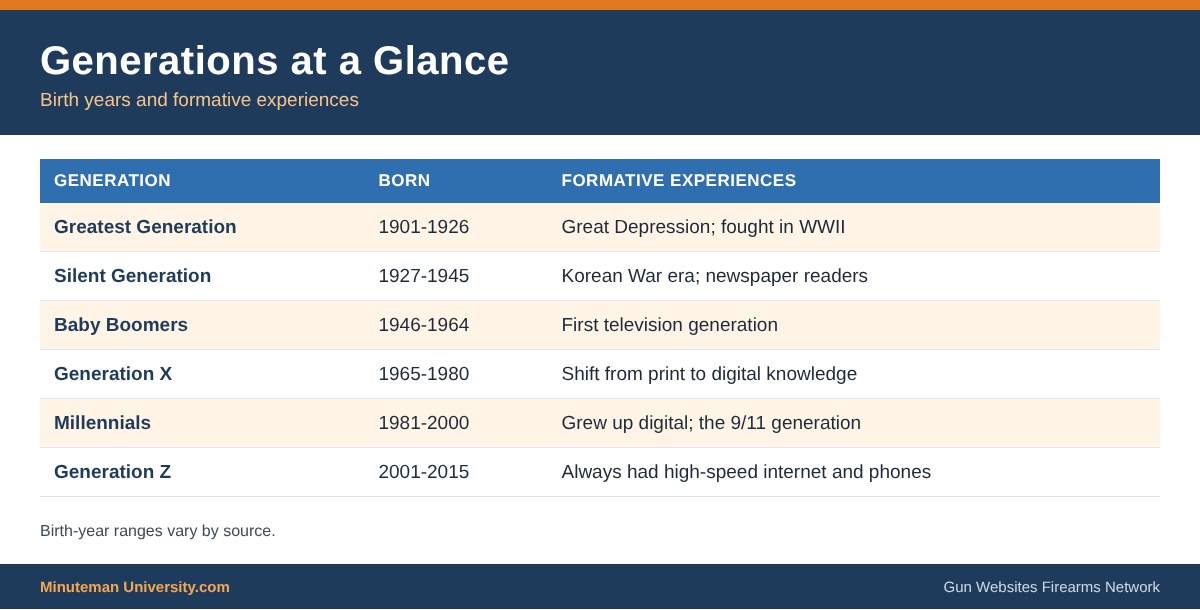
- Born 2001 – 2015
- Will be the largest generation
- The future of: 2A,and communication, banking, shopping, learning, voting, working, investing
- Savvy consumers, know what they want, know how to get it
- over saturated with media / require feedback
- Never known a world without high speed internet & cell phones
- Always had access to: Uber, Amazon, Netflix, GrubHub
- Do not remember 9/11
Millennials
- Born 1981 – 2000
- 71 million
- largest generation in the workforce
- The 9/11 Generation
- work in teams
- Taught that they could be shot at school
- Taught that the world is not a safe place
- grew up in a digital environment
- Never known a world without computers
Generation X
- Born 1965 – 1980
- 65 million
- Transition phase of written based knowledge to digital knowledge archives
- Remember being in school without computers
- Social problems were about drugs
- Average 7 career changes in their lifetime
Baby Boomers
- Born 1946 – 1964
- 74 million
- Largest generation – 77 million people
- First TV generation
- measure success in hours per week
Silent Generation
- Born 1927 – 1945
- 25 million
- Korean & Vietnam War generation
- Read newspapers
Greatest Generation
- Born 1901 – 1926
- Children of the WWI generation
- Young in the Great Depression
- Fighters in WWII
- Saved the world and then built a nation
- First generation of radio, TV and air flight
- They were the last generation that remembers life without airplanes, radio, and TV
Key Points
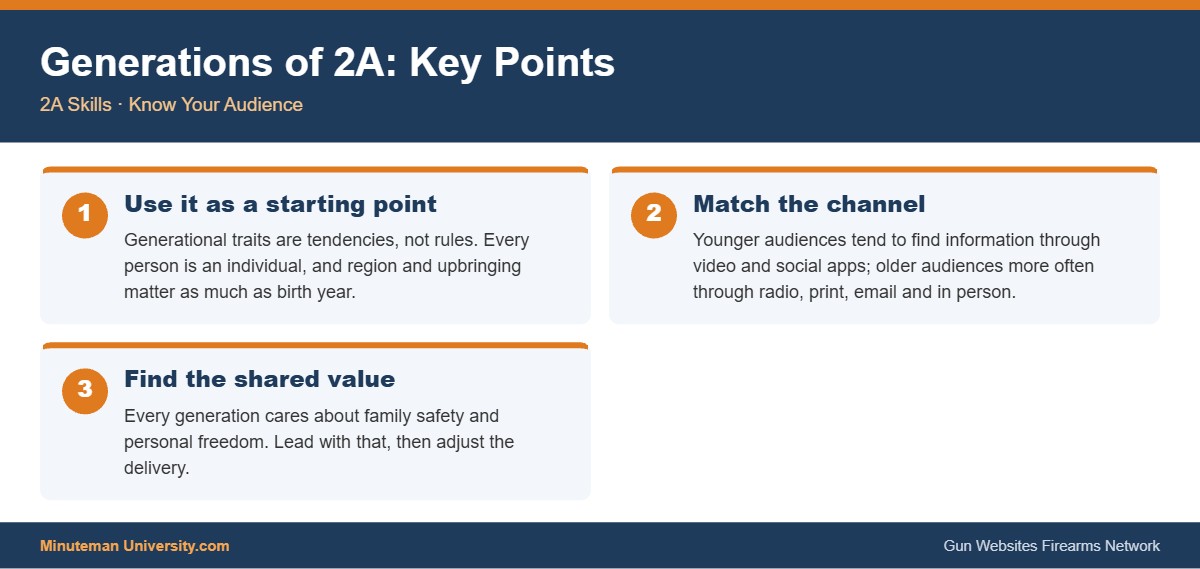
1Use it as a starting pointGenerational traits are tendencies, not rules. Every person is an individual, and region and upbringing matter as much as birth year.
2Match the channelYounger audiences tend to find information through video and social apps; older audiences more often through radio, print, email and in person.
3Find the shared valueEvery generation cares about family safety and personal freedom. Lead with that, then adjust the delivery.