Joe Meigs

1840 – 1907

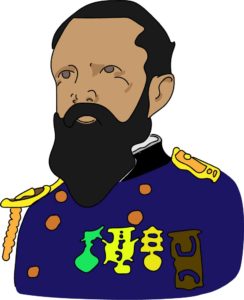
  • 1840 Joe Vincent Meigs born in Nashville, Tennessee
  • patented a breech loading firearm
  • patented a metal cartridge with an improved firing chamber
  • 1869 appointed Meigs agent of the U.S. Cartridge Company
  • invented a single-rail elevated railway system

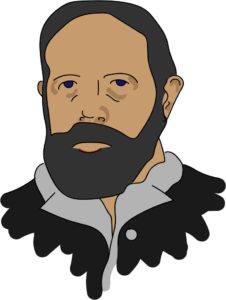
Col. William C. Church

(August 11, 1836 – May 23, 1917)

  • 1861–62 Washington correspondent of the New York Times
  • 1863 Founded the Army and Navy Journal
    Our FIRST Firearm Instructor?
  • 1866 co-founded Galaxy Magazine, which published the early writings of Mark Twain
  • 1870 one of the founders of the Metropolitan Museum of Art
  • 1871 Meets with Gen. George Wingate
    –  they decide to create military manuals on marksmanship
  • 1871 co-founder of the National Rifle Association
  • 1872 Second president of the National Rifle Association
  •  1882 commissioner to inspect the Northern Pacific Railroad
  •  https://en.wikipedia.org/wiki/William_Conant_Church

Colonel William C. Church was a notable figure in American journalism, publishing, and politics, and he also played a significant role in the history of the National Rifle Association (NRA).

Church’s involvement with the NRA began in 1871, shortly after its founding, when he was approached by the organization’s first president, George Wingate, to help promote and develop the organization. Church was a passionate outdoorsman and hunter, and he saw the NRA as an opportunity to promote responsible gun use and marksmanship training.

As a result of Church’s efforts, the NRA began to grow rapidly, and he served as the organization’s second president from 1874 to 1876. During his tenure, he helped establish the NRA’s annual shooting competitions and worked to promote gun safety and marksmanship training across the United States.

Church was also an early advocate for the Second Amendment, which he saw as a crucial component of American freedom and democracy. In an editorial published in the Army and Navy Journal in 1871, he wrote, “To preserve liberty, it is essential that the whole body of the people always possess arms, and be taught alike, especially when young, how to use them.”

In addition to his work with the NRA, Church was a prominent figure in American journalism and publishing. He served as the managing editor of the New York Sun and helped found the Army and Navy Journal. He was also a philanthropist and supporter of various charitable causes, including the American Society for the Prevention of Cruelty to Animals and the National Child Labor Committee.

Overall, Colonel William C. Church played a significant role in the history of the NRA and helped shape the organization into what it is today. He was a passionate advocate for responsible gun use, marksmanship training, and the Second Amendment, and his contributions have had a lasting impact on American culture and politics.


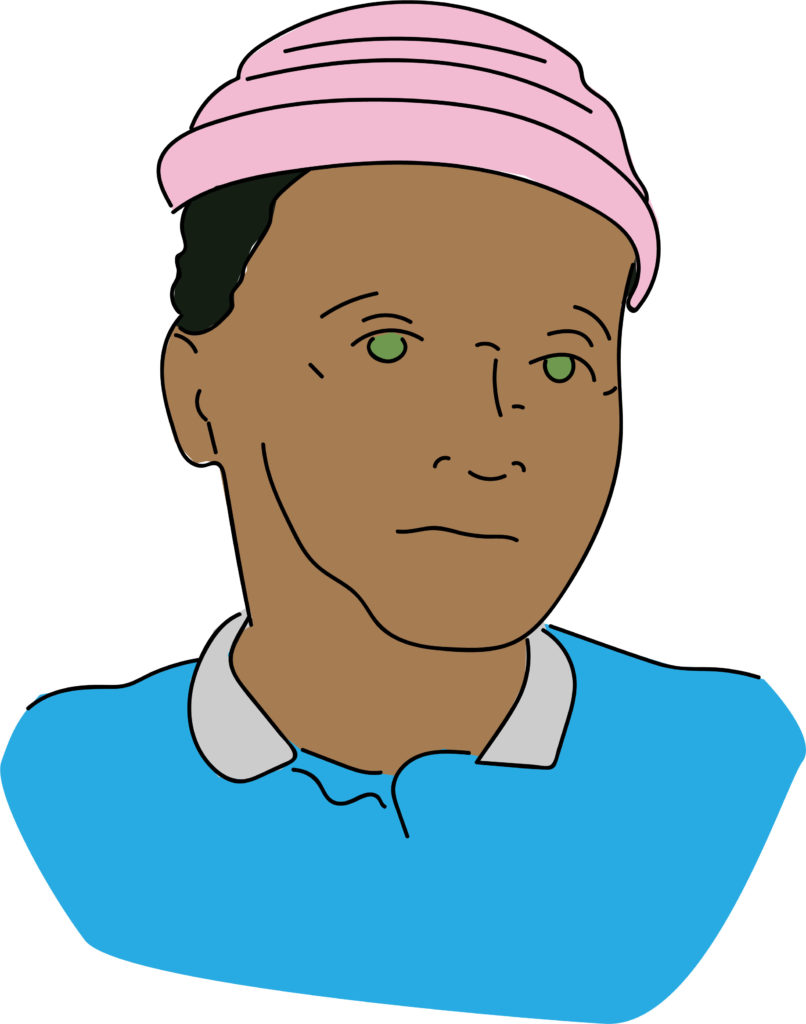
Mary Fields

1832 – Dec 5, 1914

“Stagecoach Mary”

  • Born a slave in Tennessee
  • 1865 – freed when slavery was outlawed
  • 1870 – Worked on the steamboat Robert E. Lee 
  • 1884 – moved to Montana
  • 1885 – first African American woman to become a U.S. postal service Star Route mail carrier
  • 1885 – 1889 – 1st Star Route
  • 1889 – 1893 – 2nd Star Route
  • 1894 – opened a restaurant in Cascade, MT Fields would serve food to anyone, whether they could pay or not (closed in 10 months)
  • 1895 – at 60+ years old, Fields was hired as a mail carrier
    This made her the second woman &
    first African American woman to work for the U.S. Postal Service
    At 60 yrs old, she was the fastest applicant to hitch a team of six horses
    If the snow was too deep for her horses, Fields delivered the mail in snowshoes
  • hard-drinking, quick-shooting mail carrier sported two guns
    fended off an angry pack of wolves with her rifle
  • 1910 – When the local motel was sold, a stipulation to the transaction was that all meals for Mary Fields would be offered free of charge for the rest of her life
  • 1912 – her laundry business and her home burned down, the townspeople gathered and built her a new home.
  • 1914 – her funeral was one of the largest the town had ever seen
  • 1959 – actor Gary Cooper met Fields when he was a child, and wrote an account of his memories of her in Ebony magazine
  • 2015-2016 – AMC series, “Hell On Wheels”, featured in 5 episodes, Fields is played by Amber Chardae Robinson

“She drinks whiskey, and she swears, and she is a republican, which makes her a low, foul creature.”

schoolgirl’s essay writing about “Stagecoach Mary”

“Born a slave somewhere in Tennessee, Mary lived to become one of the freest souls ever to draw a breath, or a .38.”

Montana native Gary Cooper 

Sellier & Bellot

1825
Prague, Czechoslovakia

  • 1825 Louis Sellier & Jean Maria Nicolaus Bellot established a percussion cap factory in Prague
  • ready-made paper cartridges
  • pinfire shotshells
  • 1870 Louis Sellier died
  • 1872 Sellier family bought out Bellot
  • plants in Prussia and Latvia
  • 1893 trademark appeared
  • WWI all of their production
  • After WWI leading ammo supplier to their new country’s army and police
  • 1936 moved to Vlašim
  • 1939 Nazis took over the commpany
  • 1940 Soviets took the factory and used their ammo against the Nazis
  • S&B nationalized by Czechoslovakia after WWII
  • 1992 S&B became a joint-stock company
  • 2009 acquired by CBC (Magtech)

Sellier & Bellot

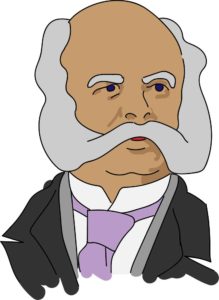
Gen. Ambrose Burnside

(May 23, 1824 – September 13, 1881)
– 1843-1847 United States Military Academy – graduated 18th in a class of 47
– 1847–1853 Mexican–American War (1st Lieutenant)
– 1853 manufactured the Burnside carbine
– 1861 – 1865 Civil War, Major General
– 1866-1869 Governor of Rhode Island
– 1871 NRA’s first President
– 1875-1881 U.S. Senator from Rhode Island
– His distinctive style of facial hair became known as sideburns

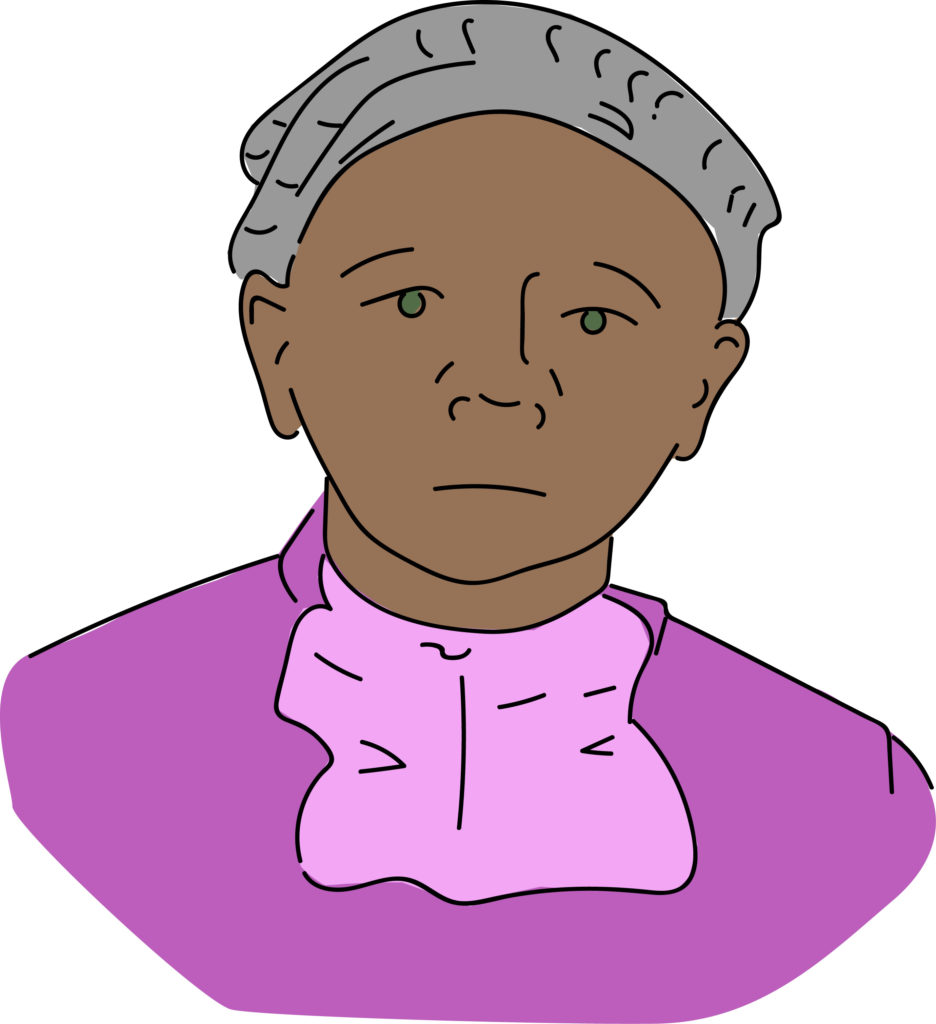
Harriet Tubman

March 1822 – March 10, 1913

  • Araminta “Minty” Ross
  • Born into slavery
  • 1844 – Married John Tubman
  • changed her name from Araminta to Harriet soon after her marriage
  • 1849 – escaped and made 13 missions to rescue 70+ slaves
  • Tubman carried a small revolver, and was not afraid to use it
  • 1858 – met abolitionist John Brown and became “General Tubman” when she helped him plan his raid (that he was killed for)
  • 1859 – Purchased property in Auburn, New York
  • 1860 – her last rescue mission
  • Civil War worked for the Union Army, first as a cook and nurse, and then as an armed scout and spy
  • 1863 – The first woman to lead an armed expedition in the war
  • June 1 & 2, 1863 – Tubman guided the raid at Combahee Ferry wich liberated 700+ slaves
  • 1865 She returned home to NY
  • 1869 – Her biography was published – Scenes in the Life of Harriet Tubman
  • 1886 – Volume 2 was published – Harriet, the Moses of her People
  • 1889 – Congress passed and President William McKinley finally approved a $20 per month pension for some of her efforts during the Civil War
  • 1896 – keynote speaker at first meeting of  National Federation of Afro-American Women
  • 1908 – Harriet Tubman Home for the Aged  opened on her NY property
  • 1913 – She was buried with semi-military honors at Fort Hill Cemetery in Auburn, NY
  • 1937 – Her grave marker was erected by the Empire State Federation of Women’s Clubs
  • 1999 – Her grave was added to National Register of Historic Places

“There was one of two things I had a right to”, liberty or death; if I could not have one, I would have the other”

Tubman

Benjamin F. Butler

November 5, 1818 – January 11, 1893
Massachusetts

  •  criminal defense lawyer
  • major general of the Union Army during the American Civil War
  • September 27, 1862, Butler formed the first African American regiment in the US Army, the 1st Louisiana Native Guard
  • 1869 – founded the United States Cartridge Company
  • leadership role in the impeachment of U.S. President Andrew Johnson
  • 1882 33rd Governor of Massachusetts
    – January 4, 1883 – January 3, 1884
  • coauthored the Civil Rights Act of 1875

Remington Arms

founded in 1816
Ilion, New York

Remington is the oldest gun maker in the US


  • largest US producer of shotguns and rifles
  • developed or adopted more cartridges than any other gun maker or ammunition manufacturer in the world
  • 1816 Remington built his own gun at age 23
    – he entered a shooting match & finished second
    – his  gun impressed other & he received orders
    – he had officially entered the gunsmithing business
  • 1816 founded by Eliphalet Remington
  • 1828, he moved to Ilion
  • March 7, 1888 Remington family sold to owners the
    Union Metallic Cartridge Company
    and the Winchester Repeating Arms Company
  • 1888 renamed Remington Arms Company
    the Union Metallic Cartridge Company in Bridgeport, Connecticut became the Remington ammunition plant
  • 1912 Remington and Union Metallic Cartridge Company combined into  Remington UMC
  • 1915 Ilion factory was expanded
  • Remington was purchased by DuPont
  • 1934  purchased the Peters Cartridge Company
    – headstamps  “R-P”  for Remington-Peters
  • World War II built the M1903A3 Springfield bolt-action rifle
  • 1962 Remington introduced the Model 700 bolt-action rifle
  • 1986 closed Bridgeport, Connecticut ammo factory
    – moved to Lonoke, Arkansas
  • 1987 built clay target factory in Athens, Georgia
  • 1993 DuPont sold Remington
  • June 2007 Cerberus Capital Management bought Remington Arms
    – Renamed to Freedom Group
  • December 2007, Remington Arms bought Marlin Firearms
  • October 2009 bought Advanced Armament Corporation
  • 2015, the Freedom Group was renamed as Remington Outdoor Company
  • March 2018 filed for Chapter 11 bankruptcy
  • July 28, 2020 filed again for Chapter 11 bankruptcy

Remington Arms

Militia Acts of 1792

The first Act, passed May 2, 1792

authority of the president to call out the militias of the several states

“whenever the United States shall be invaded, or be in imminent danger of invasion from any foreign nation or Indian tribe”

The second Act, passed May 8, 1792

provided for the organization of the state militias. It conscripted every “free able-bodied white male citizen” between the ages of 18 and 45 into a local militia company. (This was later expanded to all males, regardless of race, between the ages of 18 and 54 in 1862.)

Militia members, referred to as “every citizen, so enrolled and notified”, “…shall within six months thereafter, provide himself…” with a musket, bayonet and belt, two spare flints, a cartridge box with 24 bullets, and a knapsack. Men owning rifles were required to provide a powder horn, ¼ pound of gunpowder, 20 rifle balls, a shooting pouch, and a knapsack

Some occupations were exempt, such as congressmen, stagecoach drivers, and ferryboatmen.