Audio Hosting: Podcasts, Platforms and Keeping 2A Audio Online
Audio is one of the easiest ways for a 2A project to reach people: listeners can follow a podcast while driving to the range, at work or in the field. Most podcasts run on a simple system that is worth understanding before choosing a service. A podcast host stores the audio files and publishes an RSS feed. Listening apps such as Apple Podcasts, Spotify, YouTube Music and Pocket Casts read that feed and display the episodes. Because the feed belongs to the show, a podcast can usually move to a different host and keep its subscribers by redirecting the feed.
That structure is the main protection against deplatforming. If one listening app removes a show, the feed keeps working everywhere else, and the show can also post episodes on its own website. Apps and hosts each set their own content rules. Spotify’s Platform Rules, for example, prohibit content promoting the sale of illegal firearms or firearm parts, and podcasts published on YouTube fall under YouTube’s firearms policy, which bars links to firearm sellers and live streams showing someone holding or handling a firearm. Discussion of gun law, history, training and current events is generally permitted, but the details of each policy matter, so read them before launch. Platforms also change: Google Podcasts shut down in the United States in April 2024, and listeners were moved to YouTube Music.
Audio carries its own privacy considerations. Voices are identifiable, background sounds can reveal a location, and guests may share more than they intend. Hosts and guests should agree on what stays off the record before recording.
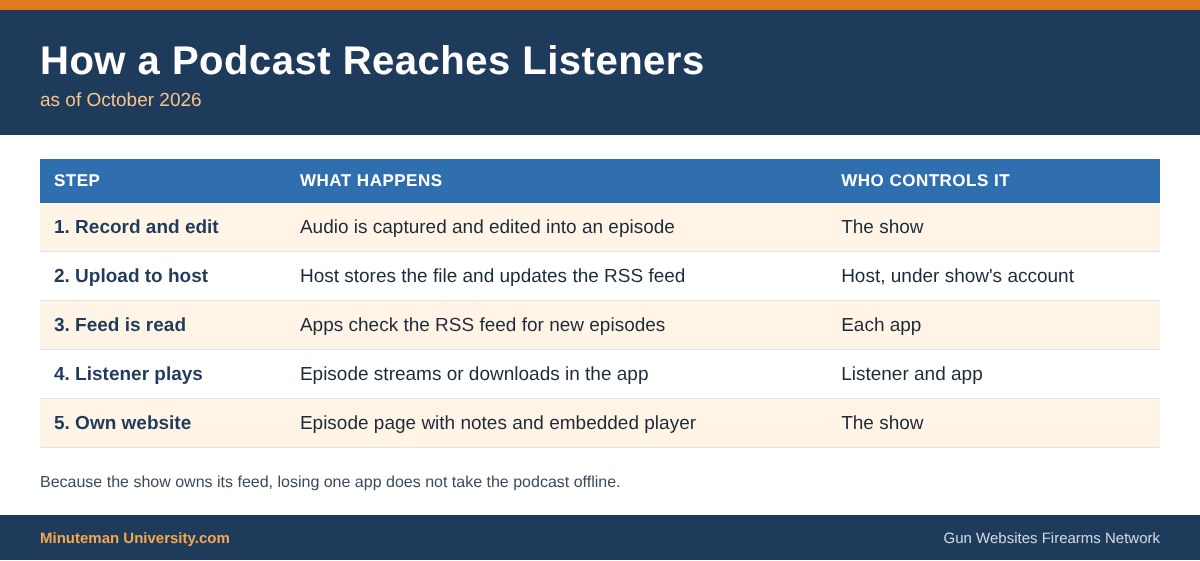
Parts of a Podcast Setup
- Recording: a microphone and free or paid editing software (Audacity is a free, open-source option).
- Podcast host: stores files and generates the RSS feed; examples include Buzzsprout, Libsyn, Podbean and RSS.com.
- Directories and apps: Apple Podcasts, Spotify, YouTube Music, Amazon Music and others that list the feed.
- Own website: an episode page with show notes and an embedded player that the show controls.
- Archive copies: original files kept locally and in at least one other location.
Tips for 2A Podcasters
- Keep master audio files and the RSS feed under the show’s control so a move between hosts is possible.
- Read each platform’s firearm and regulated-goods rules; avoid sales links where they are prohibited.
- Use a custom domain for the feed or website when the host allows it, so the address never depends on one company.
- Get written permission from guests and avoid copyrighted music.
- Review raw audio for addresses, names of family members or other personal details before publishing.
Related: Firearm Videos, Speech Recognition and Using Technology & the Internet. Network hub: Gun Websites.com.
Sources
- Spotify: Platform Rules
- YouTube Help: Firearms policy
- TechCrunch: Google Podcasts users moved to YouTube Music

Podcasting, Audio books, radio shows. music and more. All are available on sound-focused apps, and online archives. Some are Item-on-Demand others are a random feed like the radio
Podcasting has a few aspects to keep in mind for 2A:
- more on the way