What are Hashtags ?

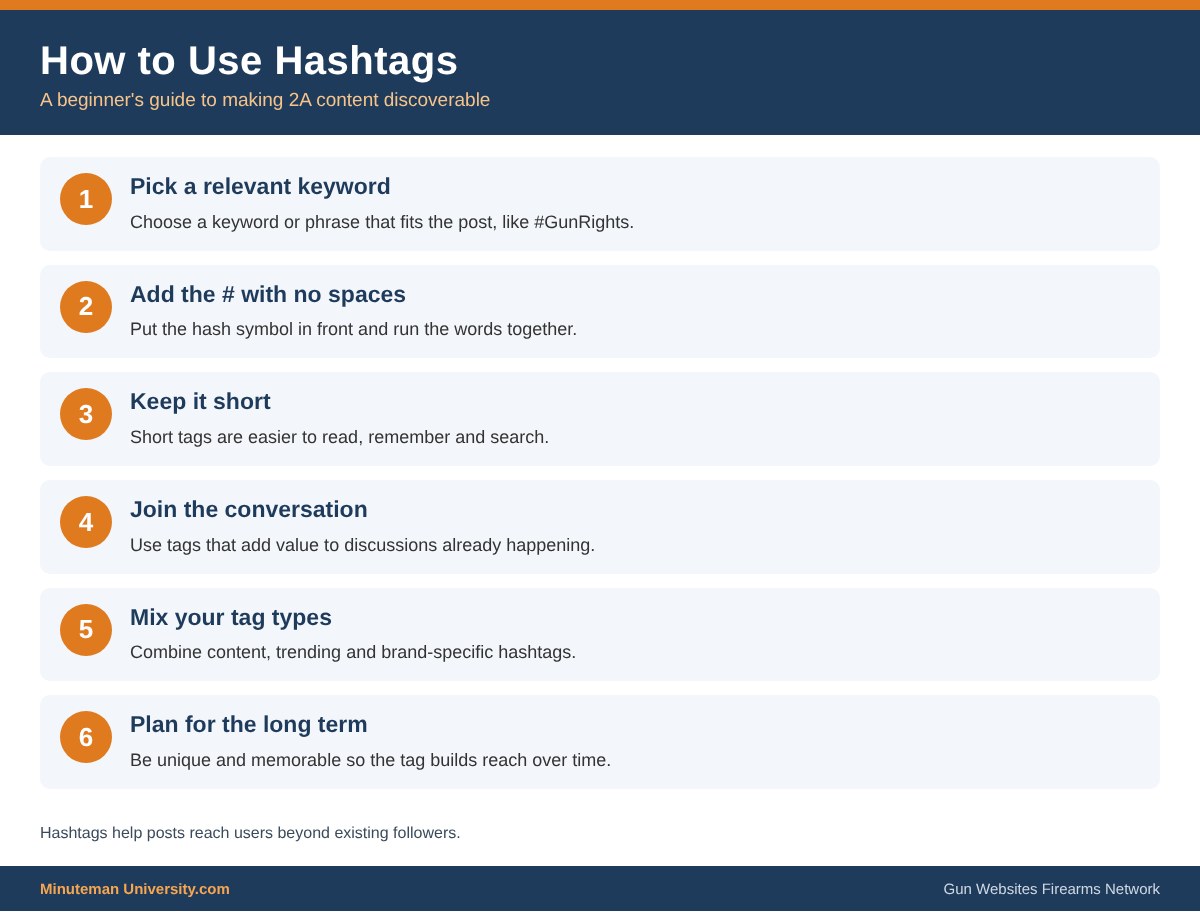
Six numbered steps for using hashtags on social media: choose a relevant keyword, add the hash symbol without spaces, keep it short, add value, mix tag types and plan long term.

Hashtags are a powerful tool Used to Identify Messages Makes your Content Discoverable Beginner’s Guide to Hashtags What exactly is a hashtag? Think about the number of images published on all social platforms The Hashtag is a keyword or phrase preceded by the  # (hash symbol) Typically within a post or comment There is no list … Read more
Well-Researched Narrative on Gun Laws

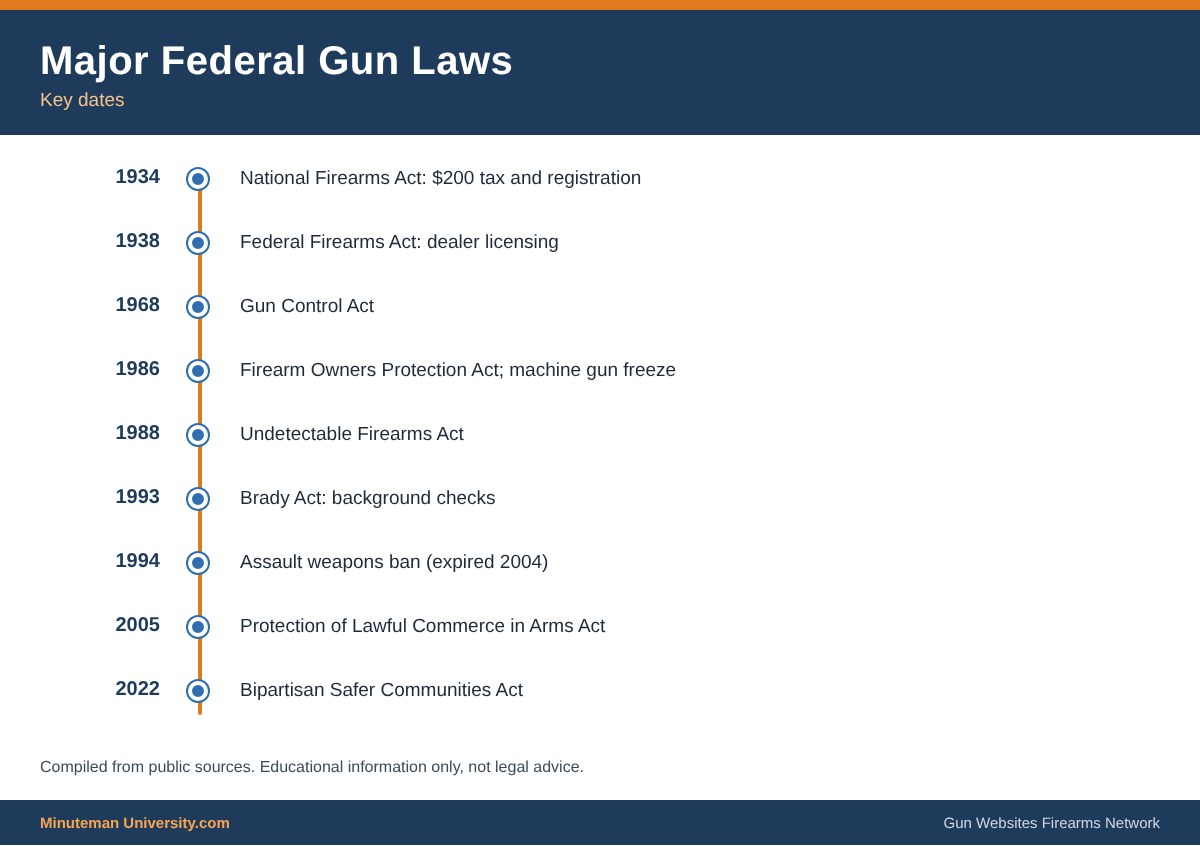
Timeline of major federal gun laws from the 1791 Second Amendment through the 1934 NFA, 1968 Gun Control Act, 1986 FOPA, NICS, and the 2025 and 2026 NFA changes

About the History of U.S. Gun Laws American gun law is built in layers, with each major federal statute responding to the events of its era. The National Firearms Act of 1934, passed after Prohibition-era gang violence, imposed a $200 tax and registration on machine guns, short-barreled rifles and shotguns, and suppressors. The Federal Firearms … Read more

Our Morals vs. Their Morals

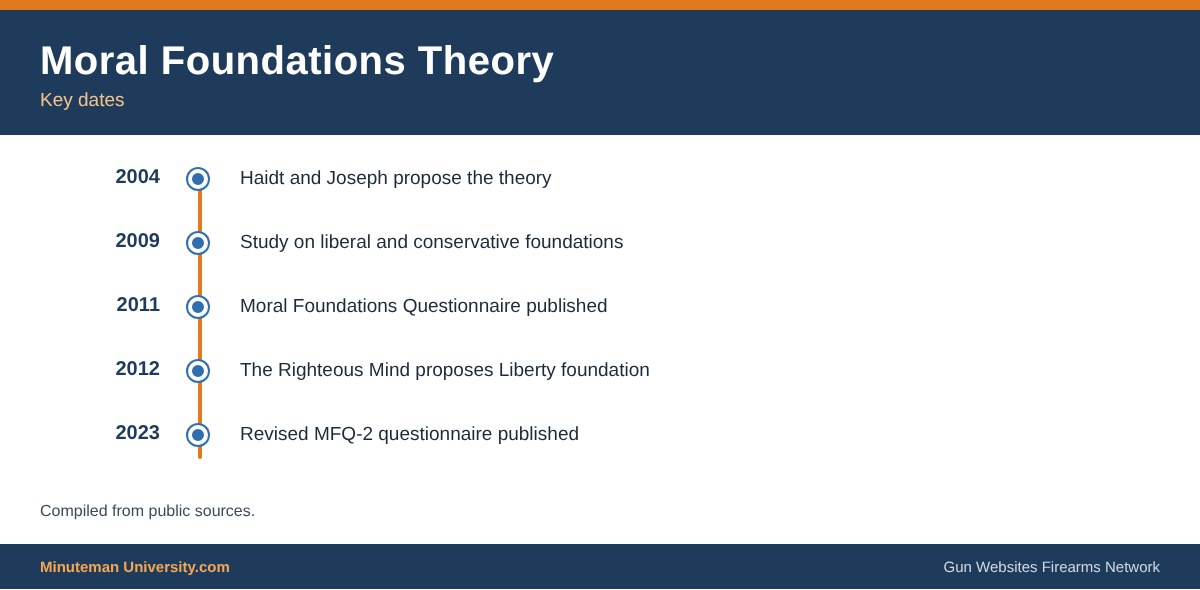
About Our Morals vs. Their Morals People on different sides of the gun debate usually share the same goal of safety but weigh moral values differently. Social psychology offers a useful framework for understanding why. Moral Foundations Theory, first proposed by psychologists Jonathan Haidt and Craig Joseph in 2004, holds that human moral judgment draws … Read more

Communicating Without Pushing Buttons

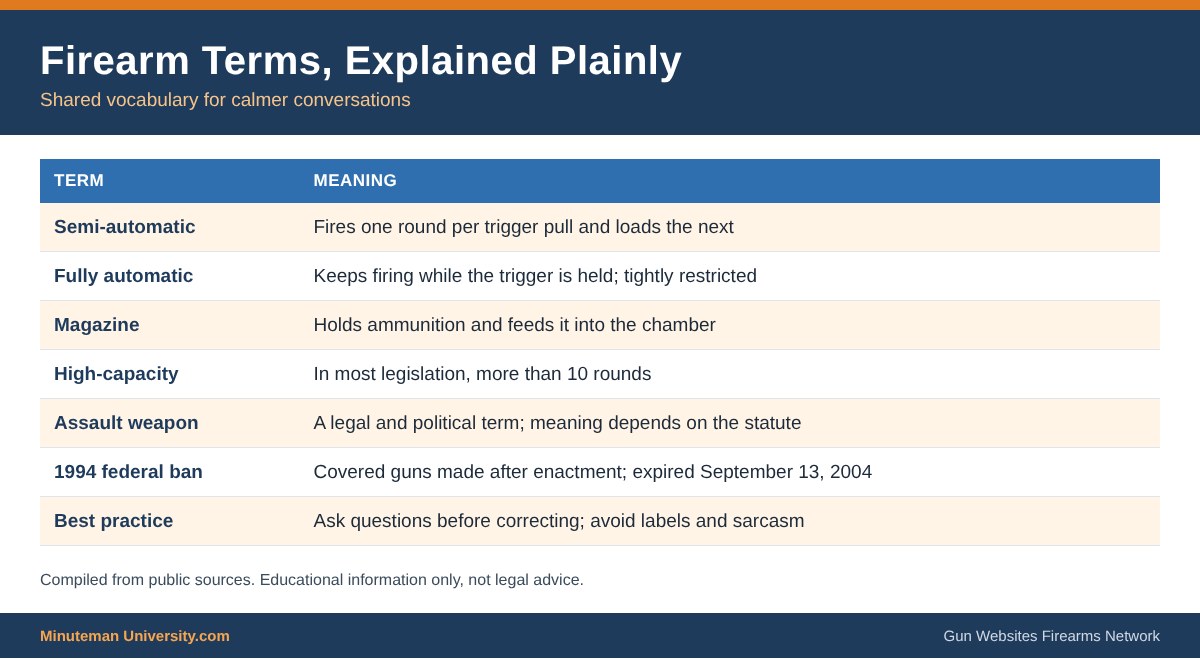
Table defining common firearm terms such as semi-automatic, fully automatic, magazine, high-capacity and assault weapon, with a tip for respectful conversation.

About Communicating Without Pushing Buttons Productive conversations about firearms depend on shared vocabulary and a respectful tone. Many disagreements escalate not over policy but over words: one side uses a term loosely, the other corrects it sharply, and the discussion ends. A calmer approach is to define terms plainly and without condescension. A semi-automatic firearm … Read more

Facts-vs-Emotion

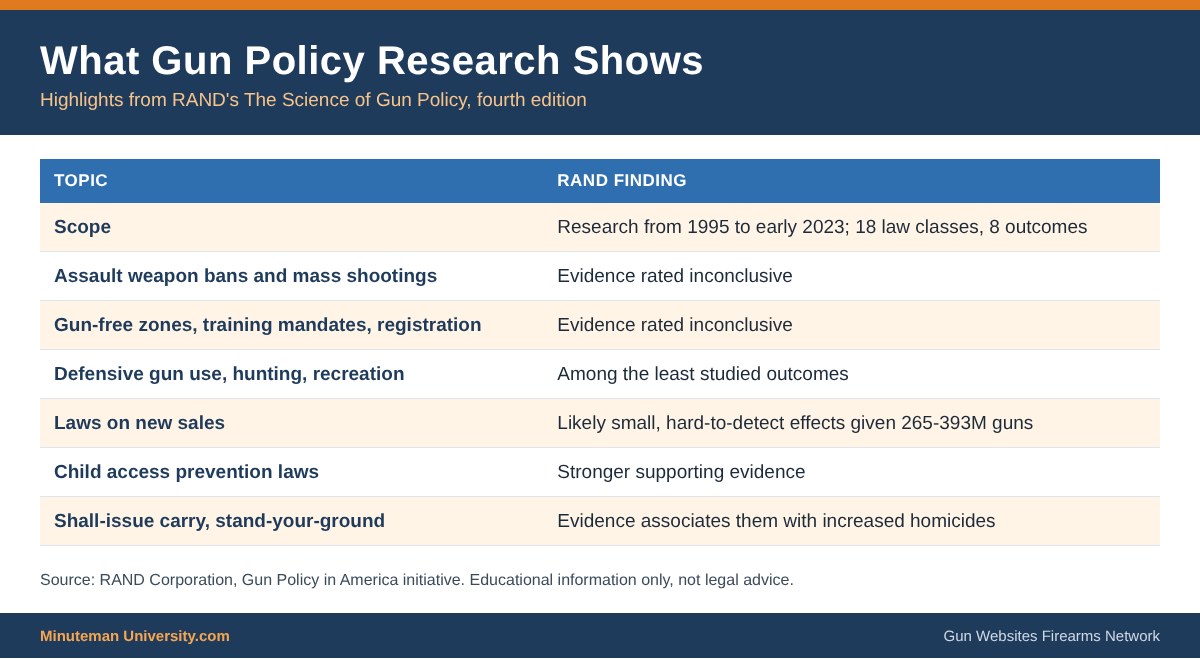
Table summarizing RAND's fourth edition review of gun policy research, listing which policies have inconclusive, limited or stronger evidence.

About Facts vs. Emotion Gun policy debates often follow high-profile tragedies, when emotions run highest and claims spread fastest. Grounding a discussion in evidence, while respecting the real grief and fear behind it, is the most credible path for Second Amendment advocates. One of the most comprehensive neutral references is RAND Corporation’s Gun Policy in … Read more

Common Responses to Typical Positions

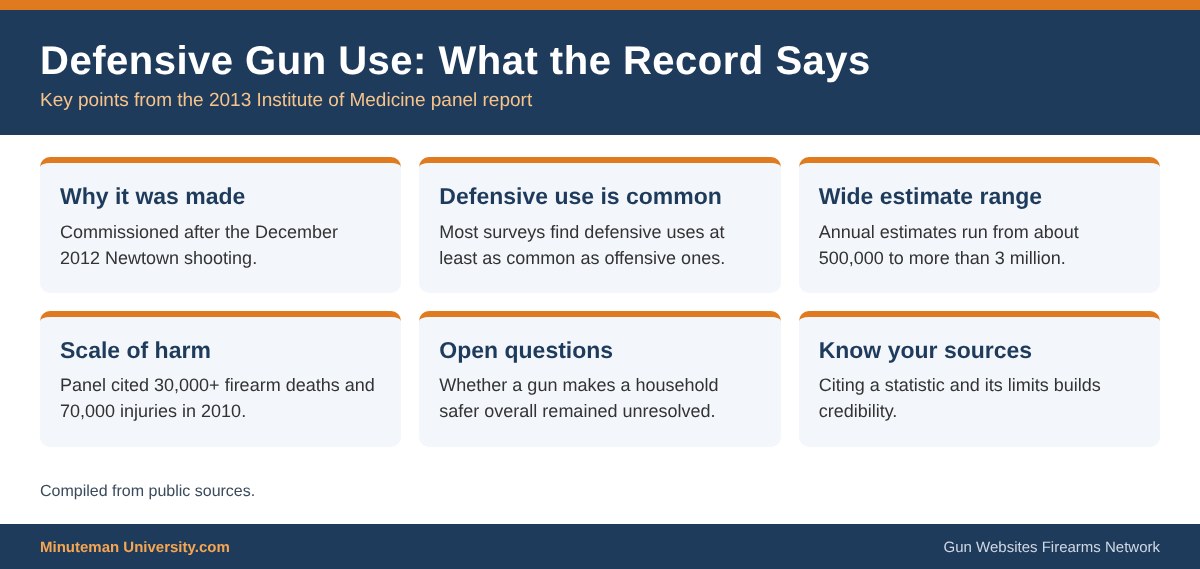
Six cards summarizing the 2013 Institute of Medicine firearm research report, including defensive gun use estimates of 500,000 to over 3 million per year and remaining open questions.

About Common Responses to Typical Positions Many gun policy discussions follow familiar patterns, and the most persuasive responses rest on credible, citable evidence rather than talking points. One frequently raised question is whether firearms are used more often to commit crimes or to stop them. A useful reference is the 2013 Institute of Medicine panel … Read more

Psychology of a Difficult Discussion

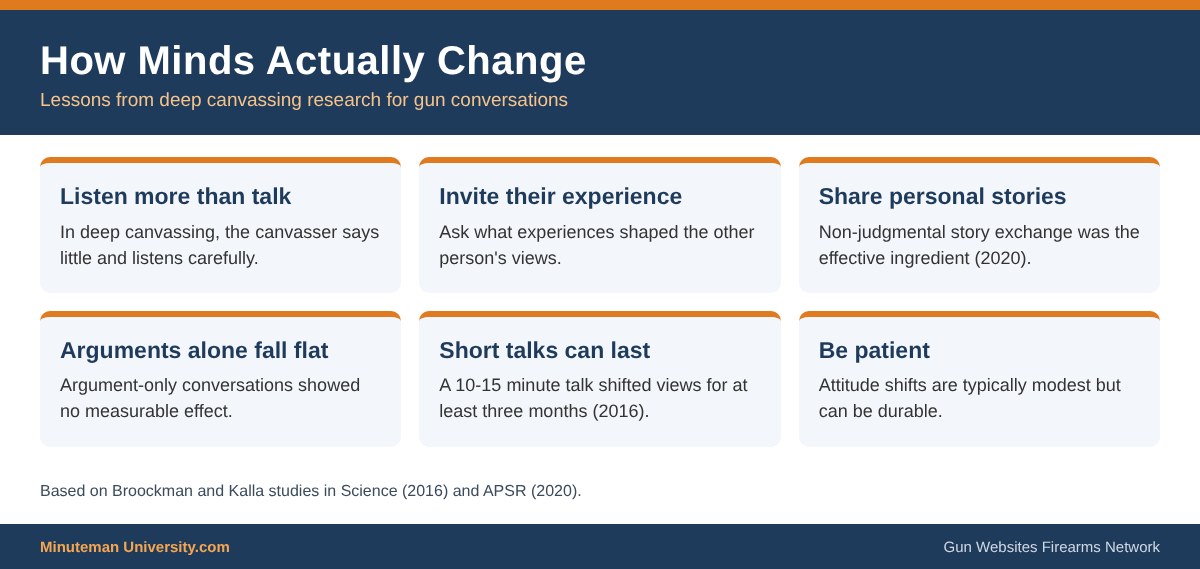
Six cards summarizing persuasion research on deep canvassing: listen, invite personal experiences, exchange stories, avoid argument-only approaches and be patient.

About the Psychology of a Difficult Discussion Conversations about firearms often stall because both sides treat them as contests of arguments. Peer-reviewed research on persuasion suggests a different approach works better. In a widely cited 2016 study published in Science, political scientists David Broockman and Joshua Kalla tested “deep canvassing,” a method in which the … Read more

Knowing the Opposition

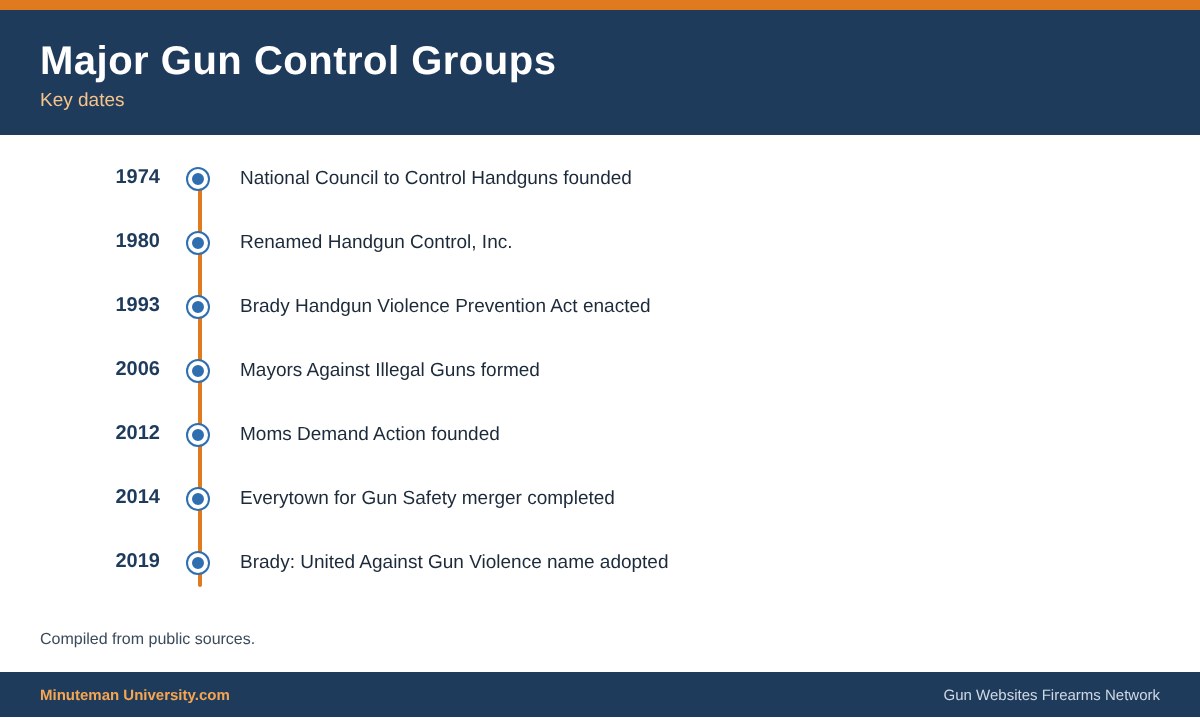
About Knowing the Opposition Understanding the organizations that advocate for stricter gun laws, including their history, structure and stated goals, helps Second Amendment supporters engage accurately and respectfully. The oldest major national group traces to 1974, when Mark Borinsky, a victim of armed robbery, founded the National Council to Control Handguns. It became Handgun Control, … Read more

How to Keep Up With Firearm News

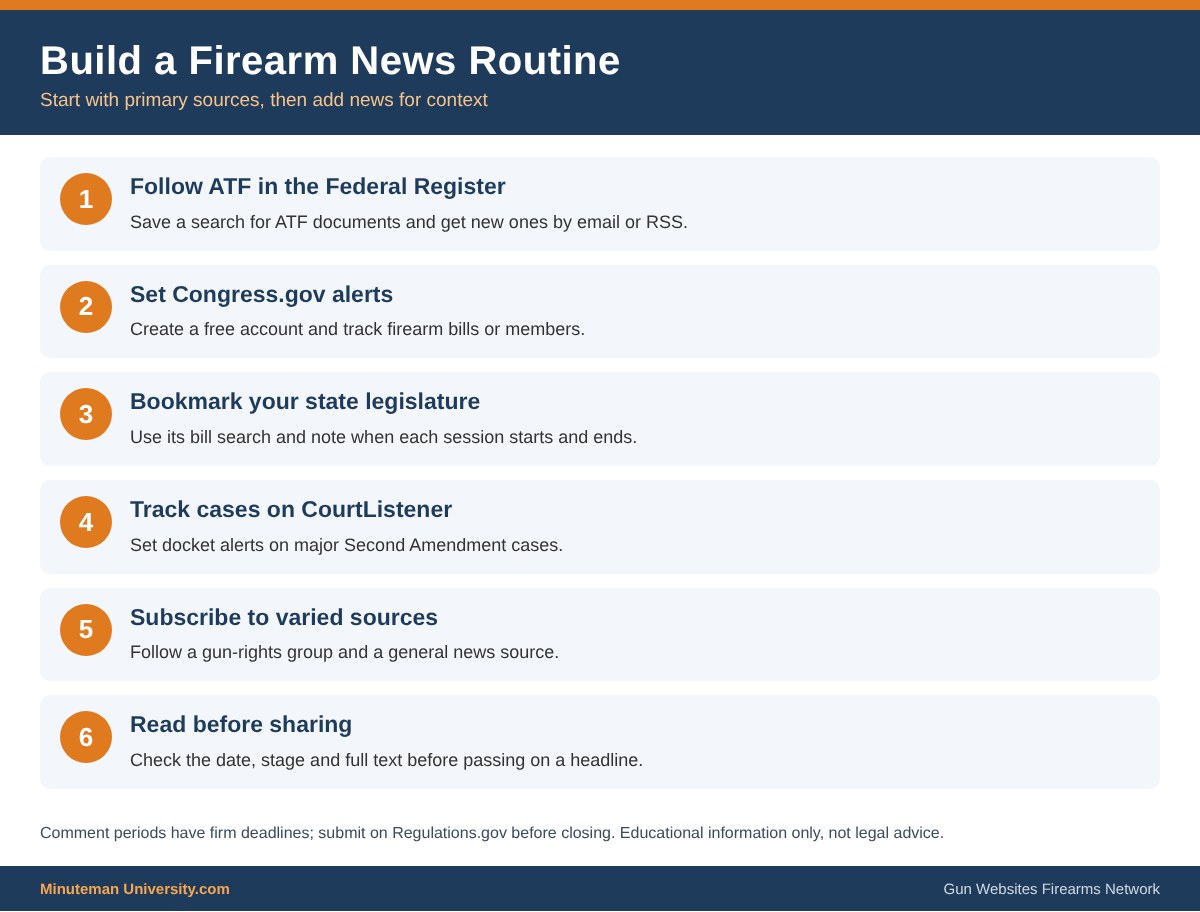
Six numbered steps for keeping up with firearm news: follow ATF in the Federal Register, set Congress.gov alerts, bookmark state legislature sites, track court cases, subscribe to varied sources and read before sharing.

How to Keep Up With Firearm News: A Practical Guide to Primary Sources, Trackers and Alerts Firearm law changes on several fronts at once: federal agencies issue rules, Congress and 50 state legislatures introduce bills, and courts decide Second Amendment cases almost every week. Headlines often summarize these events in a sentence, sometimes inaccurately. The … Read more

How to Create Your Own Social Media Content

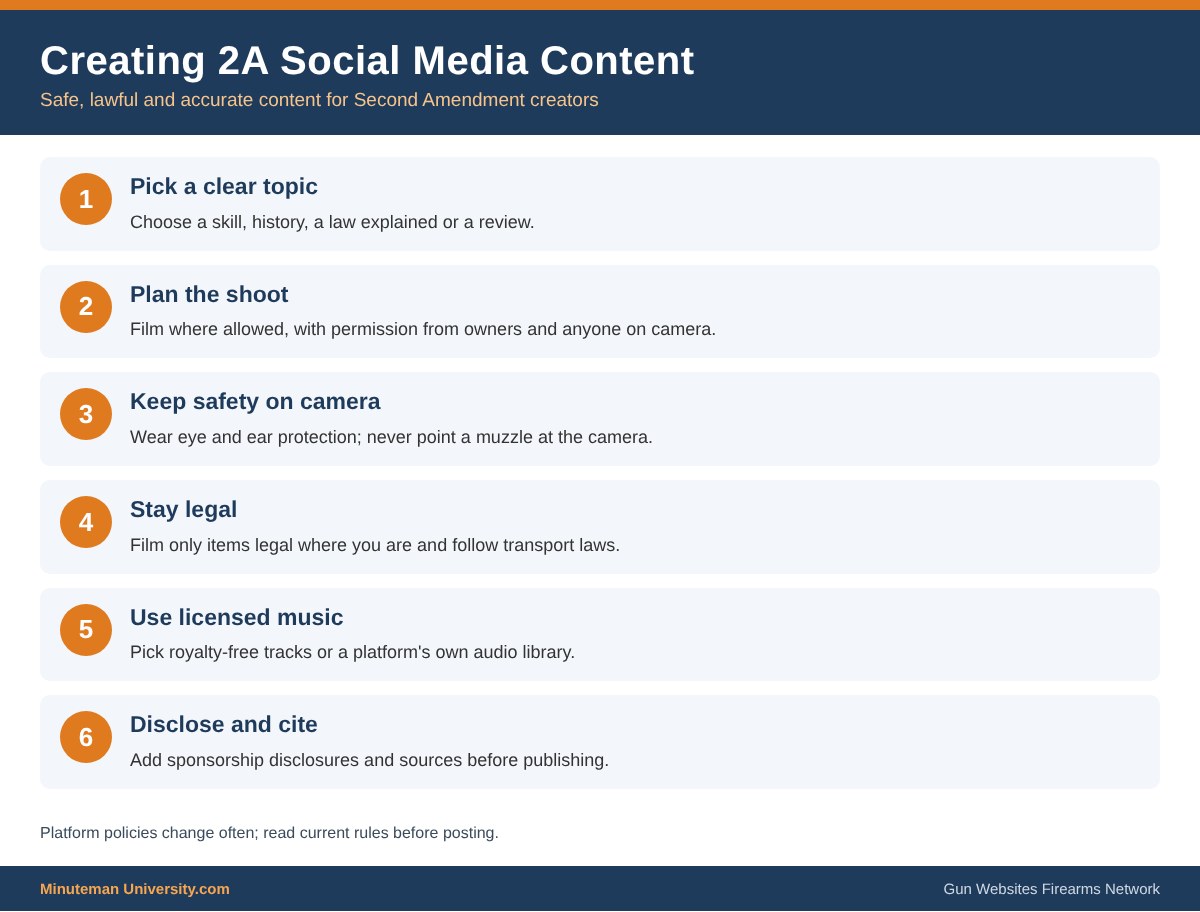
Six numbered steps for creating Second Amendment social media content: pick a topic, plan the shoot, keep safety on camera, stay legal, use licensed music, and disclose sponsorships and sources.

How to Create Your Own Social Media Content: A Practical Guide for Second Amendment Creators Videos, photos and posts made by ordinary gun owners reach millions of people, and well-made content can show safe, lawful firearm ownership to an audience that may never visit a range. Doing it well means understanding each platform’s rules, filming … Read more